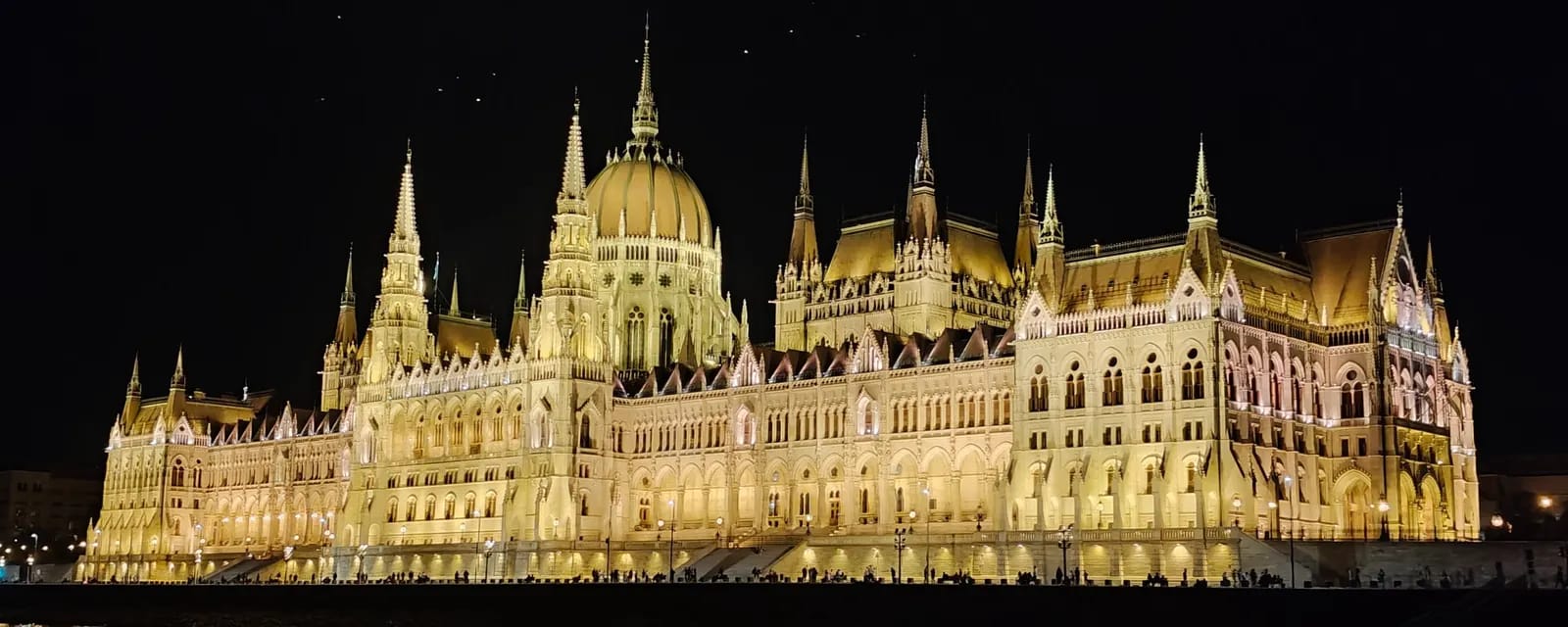
Exploring Europe, Chapter 02: Prague, Czech Republic
Prague plus day trips to Kutná Hora and Český Krumlov. Stays, transit, must-see places, nightlife, food and practical tips for Indian travellers.
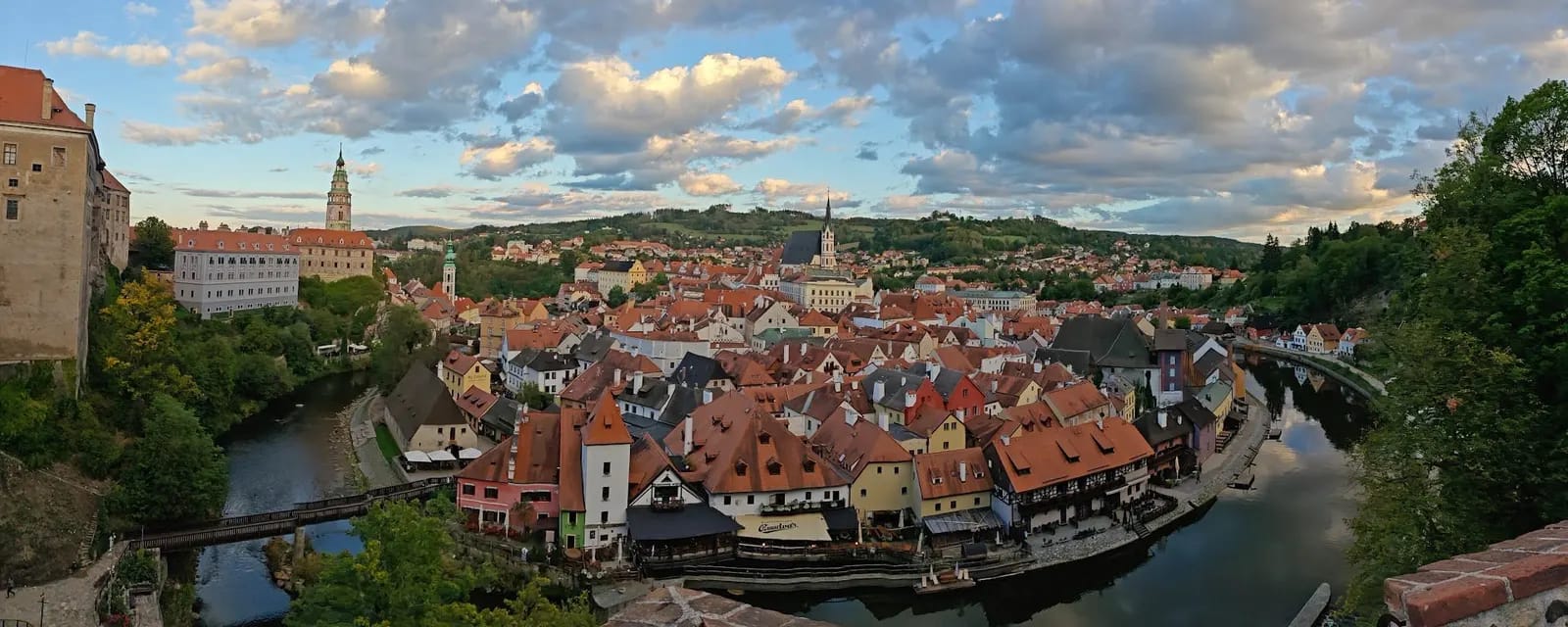
After Budapest, we’re moving further north for Chapter 02 of my Exploring Europe series. This time, it's the Czech Republic!
And more specifically: Prague → Kutná Hora → Český Krumlov
Prague was the main stop, but these two smaller towns were also part of my Czech Republic itinerary, and honestly, both are worth talking about!
If you’ve read my Chapter 01 of the series, you already know the idea behind this series. I’ve explored 50+ places across Europe, and I’m putting together everything in detail that I’ve learnt along the way to help Indians plan their Europe trips.
If you missed Chapter 01 on Budapest, you can find it here: Exploring Europe, Chapter 01: Budapest, Hungary
So let’s start with Prague!
Why Prague? 🇨🇿
Prague is a beautiful medieval city and one of Central Europe's most popular stops.
If you’re travelling with friends, especially if you’re younger or looking for nightlife and slightly crazy experiences, Prague has plenty of that! You can do things like shooting, skydiving, nightlife, bachelor activities, and a whole bunch of other experiences.
At the same time, Prague has beautiful architecture, castles, churches, cobblestone streets, museums, parks, river walks, and a lot of history!
So whether you’re travelling with friends, as a couple, or with family, Prague has something for everyone. And if you’re planning a bachelor trip, Prague is definitely one of the cities I’d keep high on the list.
Prague 🆚 Vienna 🆚 Budapest
If you’re planning a Central European trip, you’ll probably come across this combination:
Vienna → Budapest → Prague
And I actually think the order in which you do these cities can change how you experience them.
- Vienna feels more grand and imperial.
- Budapest has a lot of history and architecture too, but it also has a strong nightlife and a crazy side.
- Prague sits somewhere in between, I think. It gives you the culture and history, but also has plenty of nightlife and fun things to do.
So if you do Vienna → Budapest → Prague, Prague might feel slightly less surprising because you’ve already seen a lot of the cultural side in Vienna and the crazy side in Budapest.
If you do Vienna → Prague, Prague can feel like a nice mix of the two. And if you start your trip with Prague, even better. You get a bit of everything right at the beginning!
I’m not saying there’s a right or wrong order. Just something worth thinking about while planning!
When should you visit Prague? ⛅️
Personally, I’d look at late spring to early autumn. We visited in September, and the weather was already starting to get chilly, especially in the evenings.
May, June, and early September would probably be my preferred months if you want comfortable weather for walking around.
July and August will be warmer but also busier. You can obviously visit Prague in winter as well, especially if you want that Christmas-market, snowy-Europe kind of experience. But you’ll need to be prepared for much colder weather and shorter days.
A quick note on Schengen visas🇪🇺
If you're travelling to Prague from India, you'll need a short-stay Type C Schengen visa.
The important thing is to apply through the correct Schengen country based on your itinerary and main destination. If you're travelling to multiple countries, don't simply apply through whichever embassy has the easiest appointment or processing time!
For a detailed visa application, the exact requirements depend on your profile, itinerary, and the country you're applying through.
I've personally gone through the Schengen visa process multiple times, currently hold a 2-year multi-entry visa, and now assist travellers with their applications as well.
I offer personalised visa assistance. If you need help with your Schengen visa, you can DM me your query or book a consultation below**:**
https://topmate.io/captain_visas
You can also reach me directly on WhatsApp: https://tinyurl.com/6zmzbecb
How to get to Prague? 🚄
Prague is very well connected to the rest of Central Europe. If you’re doing the Vienna → Budapest → Prague circuit, you can easily travel between these cities by train or bus. We used trains and buses during this trip, and I found both pretty convenient.
From Vienna, you have direct train connections to Prague.
From Budapest, you also have direct train and bus options.
If you’re flying directly into Prague, you’ll land at Václav Havel Airport. Getting from the airport to the city is actually quite straightforward using public transport. The easiest option for most travellers is Trolleybus 59. You can take it directly from the airport to Nádraží Veleslavín, which takes around 15 minutes. From there, change to Metro Line A, which will take you towards the city centre. The total journey to central Prague is roughly 30 minutes!
If you’re heading specifically to Prague’s main railway station, Airport Express (AE) is another option and takes around 40 minutes.
Understand Prague before booking your hotel 🗺️
This is something I always recommend before booking accommodation in Europe (or any city, for that matter). Understand the city’s geography first!
Prague is built around the Vltava River. On one side, you’ll find areas like the Old Town, New Town, and Josefov (the historic Jewish Quarter).
On the other side, you’ll find Malá Strana, or Lesser Town, with Prague Castle sitting higher up in the Hradčany area.
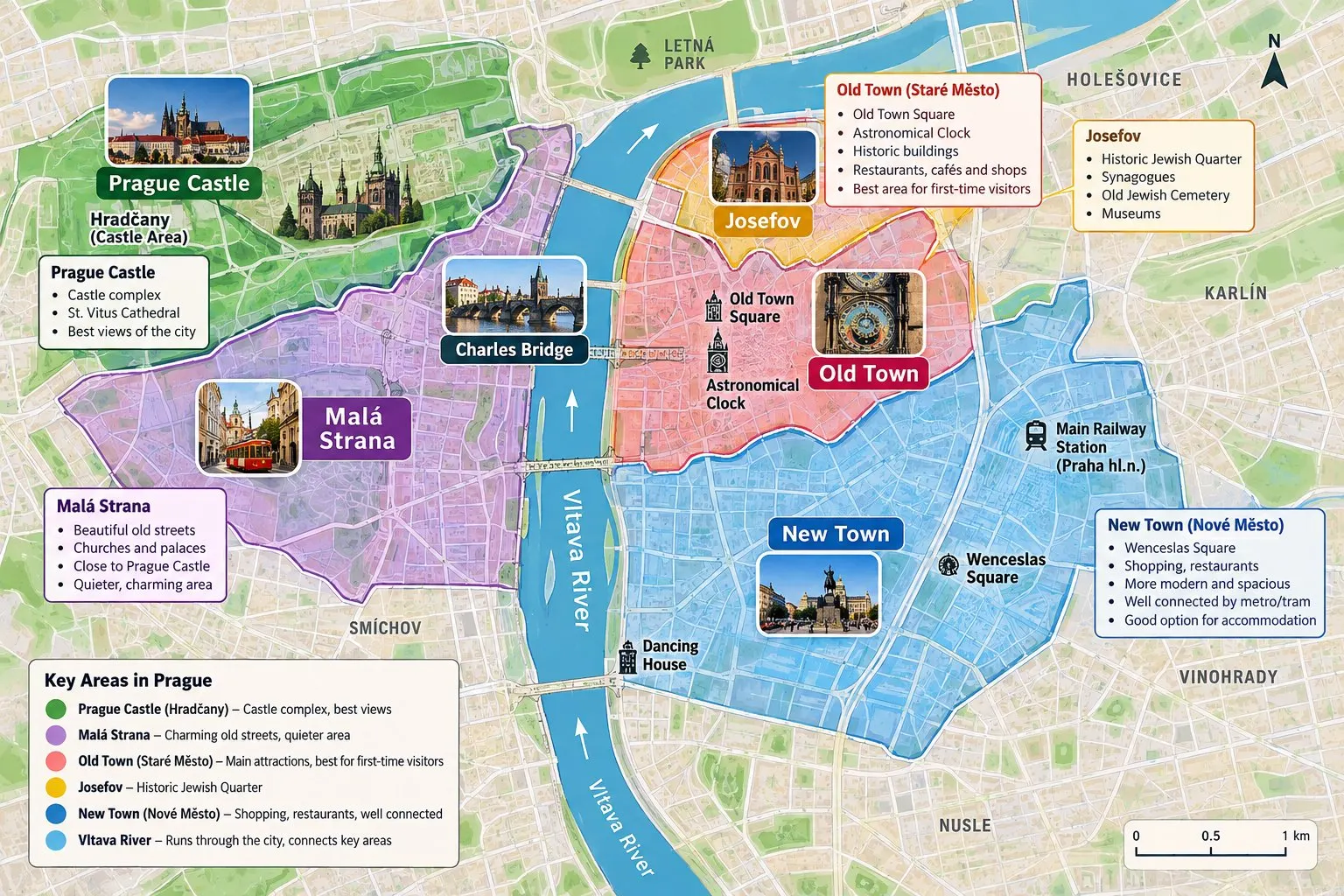
I stayed in Malá Strana. And here’s something I learnt after booking. Malá Strana is bigger than you might think. So just because your hotel says “Malá Strana” doesn’t necessarily mean you’re staying right next to the Prague Castle!
If there’s a particular attraction you want to be close to, check the actual location of the hotel. Don’t just look at the neighbourhood name!
That said, Prague has excellent public transport, and the city is very walkable.
Where should you stay? 🏨
Prague has everything from hostels and budget hotels to apartments and luxury properties. You’ll also find the usual international hotel chains.
If you’re staying for the first time, I’d personally look around the Old Town or Malá Strana (The Lesser Town).
Old Town is obviously the most convenient if you want to be in the middle of everything. And Malá Strana is beautiful and also helps if you want to be closer to the Castle side.
One thing I wouldn’t do is go too far outside the centre just to save a little money. You might save on the hotel but then spend a lot of time travelling back and forth every day.
Currency and money 💵
The Czech Republic doesn’t use the Euro! The local currency is the Czech koruna, or CZK. For a rough conversion, you can think of 1 CZK as around ₹4-5, although the actual exchange rate may vary based on when you read this article!
Cards are widely accepted in Prague, so you don’t need to carry a huge amount of cash. But I’d still keep some Czech koruna with me for smaller shops, markets, and souvenir stores.
And the same rule I mentioned in the Budapest chapter applies here too. If you need cash, use a bank-operated ATM rather than some random ATM you find on the street.
And when a POS card machine asks whether you want to pay in INR or CZK, always choose CZK. Paying in INR uses Dynamic Currency Conversion (DCC), where the merchant or payment processor sets the exchange rate, which is usually less favourable and can include an additional markup. Paying in CZK lets your card network and bank handle the currency conversion, which is the better option!
If you’re travelling to Europe, having a good forex card can also be useful. Scapia is a good ZERO Forex Credit card that you can use - https://apply.scapia.cards/landing_page?referral_code=rt8ljb
Getting around Prague 🚋
This is one area where Prague makes life very easy. The tram network is particularly useful because you can often combine sightseeing with the journey itself.
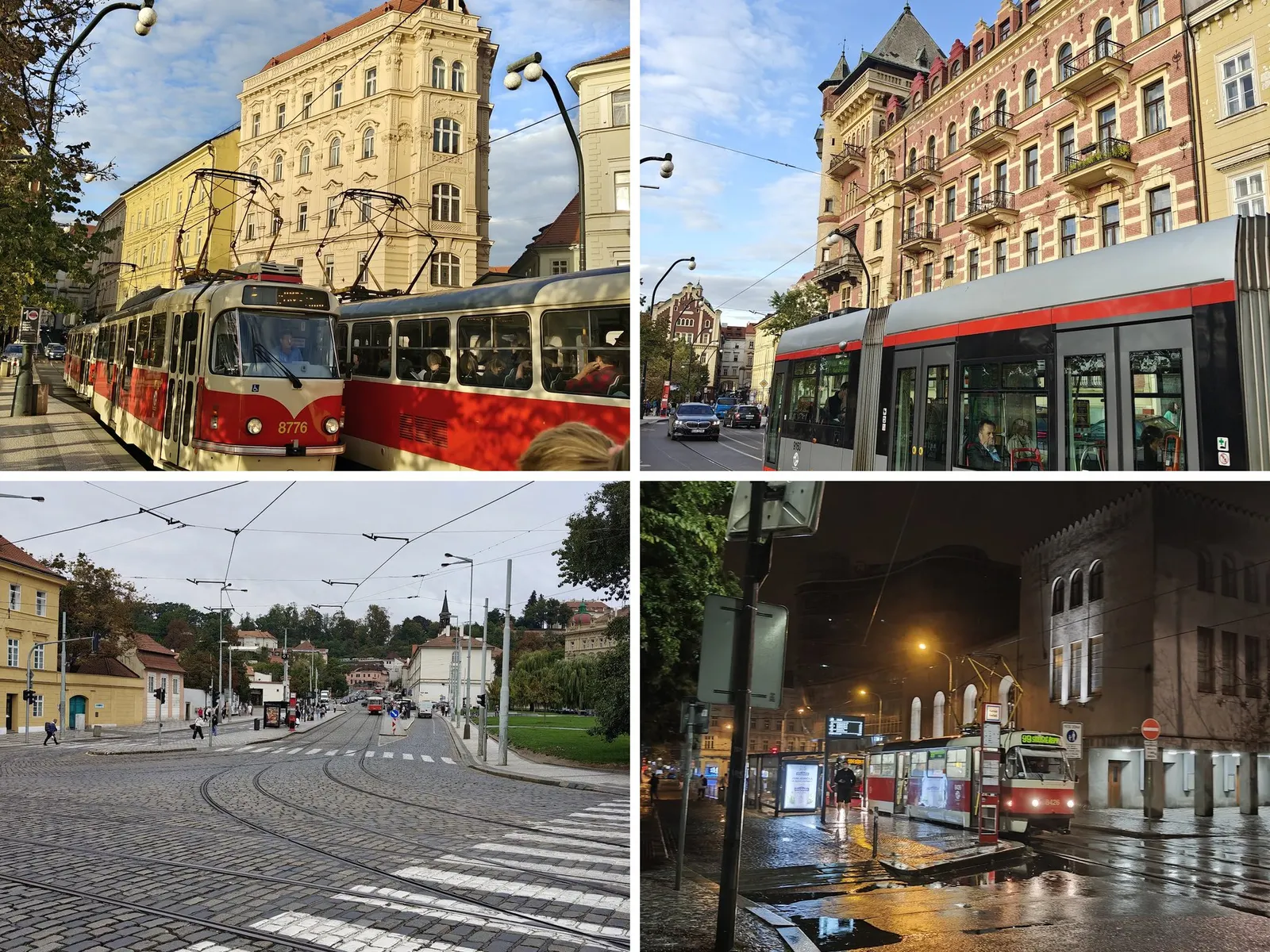
Just travelling around Prague by tram can give you some beautiful views of the city.
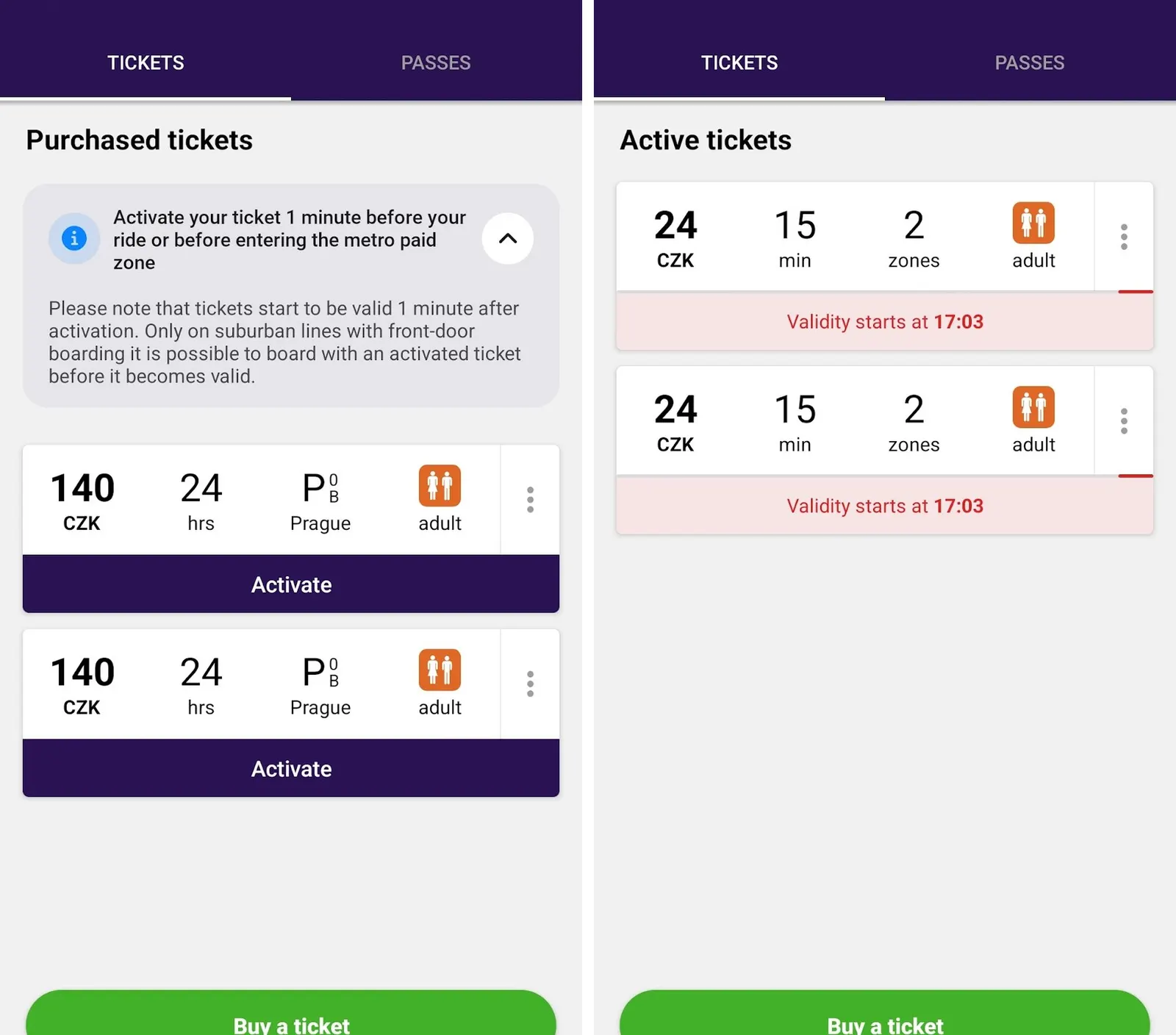
For tourists, the easiest option is to download the PID Lítačka app. This is the official Prague public transport app, and you can buy pretty much all your tickets through it.
As of 2026, the basic fares are:
- 30-minute ticket: 36 CZK
- 90-minute ticket: 46 CZK
- 24-hour pass: 140 CZK
- 72-hour pass: 340 CZK
The app is also slightly cheaper than buying paper tickets. The corresponding paper prices are 39 CZK, 50 CZK, 150 CZK, and 350 CZK.
So when does the 24-hour pass actually make sense?
A 30-minute ticket costs 36 CZK, which means once you're expecting to make four or more separate short journeys in a day, the 24-hour pass at 140 CZK starts making more sense.
Even if you're using the 90-minute ticket at 46 CZK, three such tickets would already cost 138 CZK, so the 24-hour pass is effectively worth considering if you're going to use public transport multiple times throughout the day.
And if you're staying for three continuous days and expect to use public transport regularly, the 72-hour pass at 340 CZK is cheaper than buying three separate 24-hour passes, which would cost 420 CZK!
Personally, if I'm sightseeing and know I'll be using public transport several times during the day, I'd just get the 24-hour pass and stop thinking about individual tickets.
One important thing about the PID app!
When you buy a ticket on the app, don't wait until you're standing inside the tram or metro to activate it.
There is a one-minute activation period. The ticket becomes valid only after that one minute has passed. So activate it at least a minute before boarding the tram or entering the paid area of the metro.
The app then shows the ticket along with a countdown of how long it remains valid. You can also buy the ticket in advance and choose when you want it to become active, which is quite convenient.
What about paper tickets?
You can also buy physical tickets from ticket machines at metro/tram stations. If you are using a paper ticket, you need to validate it at the beginning of your journey. You'll see the yellow validation machines at metro stations and inside trams and buses.
You insert the paper ticket into the machine, and it stamps the date and time on it. Your ticket validity starts from that point.
This also applies to the 24-hour and 72-hour paper tickets. You validate them once at the beginning of your first journey, and then the 24 or 72-hour validity runs from that timestamp. Don't validate the same ticket again, because repeated validation can invalidate it.
And just like Budapest, don't assume that because there aren't physical barriers everywhere, nobody checks. There are ticket inspectors, and travelling with an unvalidated paper ticket or an unactivated app ticket is treated as travelling without a valid ticket.
How many days do you need? ⏲️
I’d say three days is ideal for Prague. You can technically cover the major attractions in two days, but you’ll end up rushing.
Three days gives you enough time to explore the Old Town, Charles Bridge, Prague Castle, Malá Strana, the Jewish Quarter, and a few viewpoints without constantly checking the clock.
And if you want to do day trips, add 2-3 more days. Because Prague has two very good day-trip options nearby: Kutná Hora and Český Krumlov.
And I’ll come to those later. 😉
ATTRACTIONS! 🧲
Start with a Free Walking Tour 🚶♂️
One of the first things I’d recommend after arriving in Prague is taking a free walking tour. You can use <FREETOUR.com> for these.
The standard Prague walking tour takes you around the Old Town and some major attractions, and there are also themed tours on World War II, communism, Jewish history, alchemy, and the darker side of Prague.
The tours are generally around two to three hours. And like most free walking tours, there isn’t really a fixed upfront price. You tip the guide at the end based on your experience.
We had an amazing guide, Jan, who explained everything brilliantly and made the tour genuinely interesting. He had a great way of bringing the history and stories behind the buildings to life. I liked the tour so much that I made sure to take a picture with him at the end as well. Amazing guy!
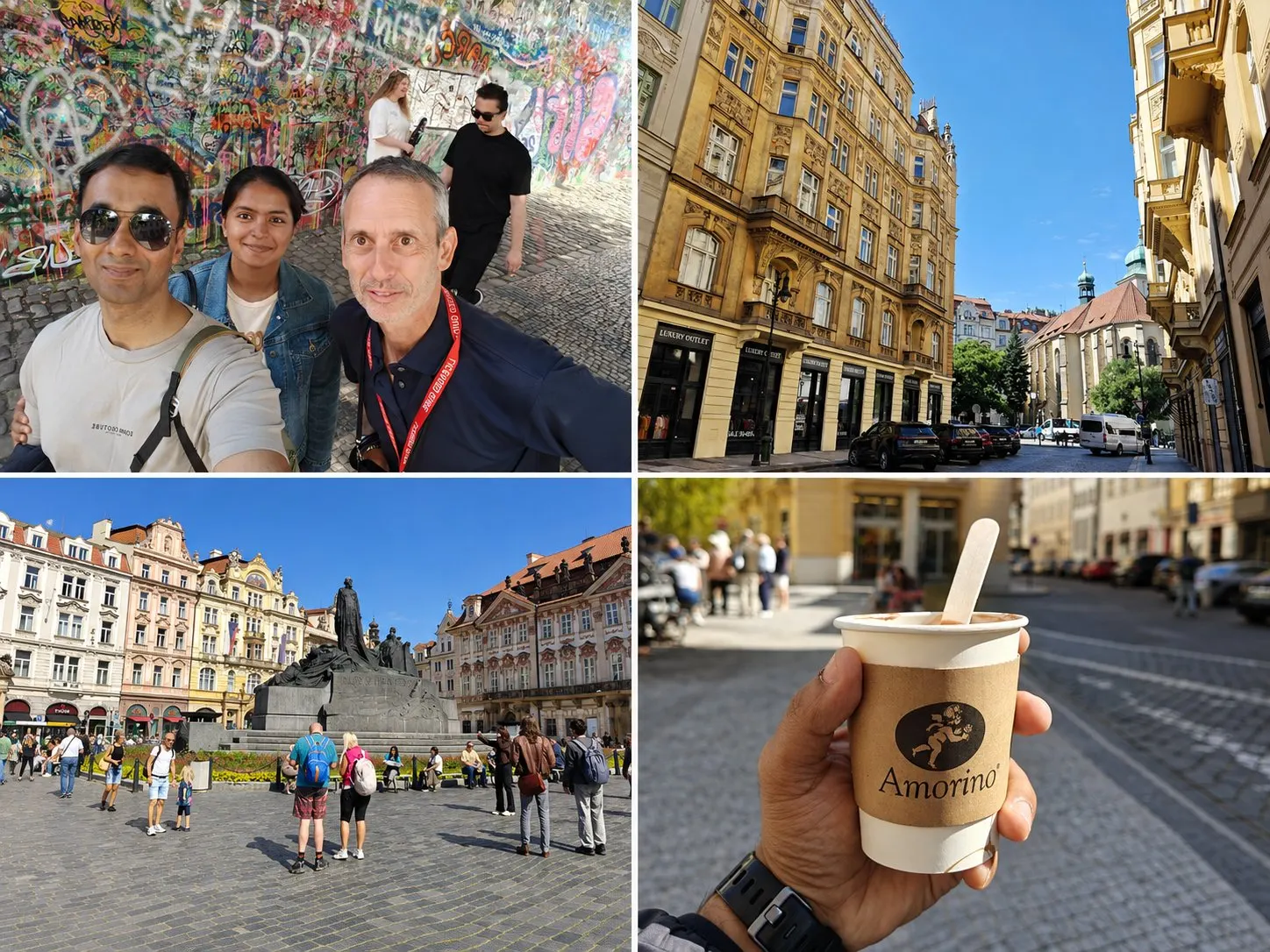
I find these particularly useful in European cities because otherwise you can spend the entire day looking at beautiful buildings without knowing why they’re important or what the story is behind them. A good tour gives you the context.
Old Town Square 🏛️
The Old Town Square is huge, open, and surrounded by some beautiful historic buildings. You’ll probably pass through here multiple times during your trip.
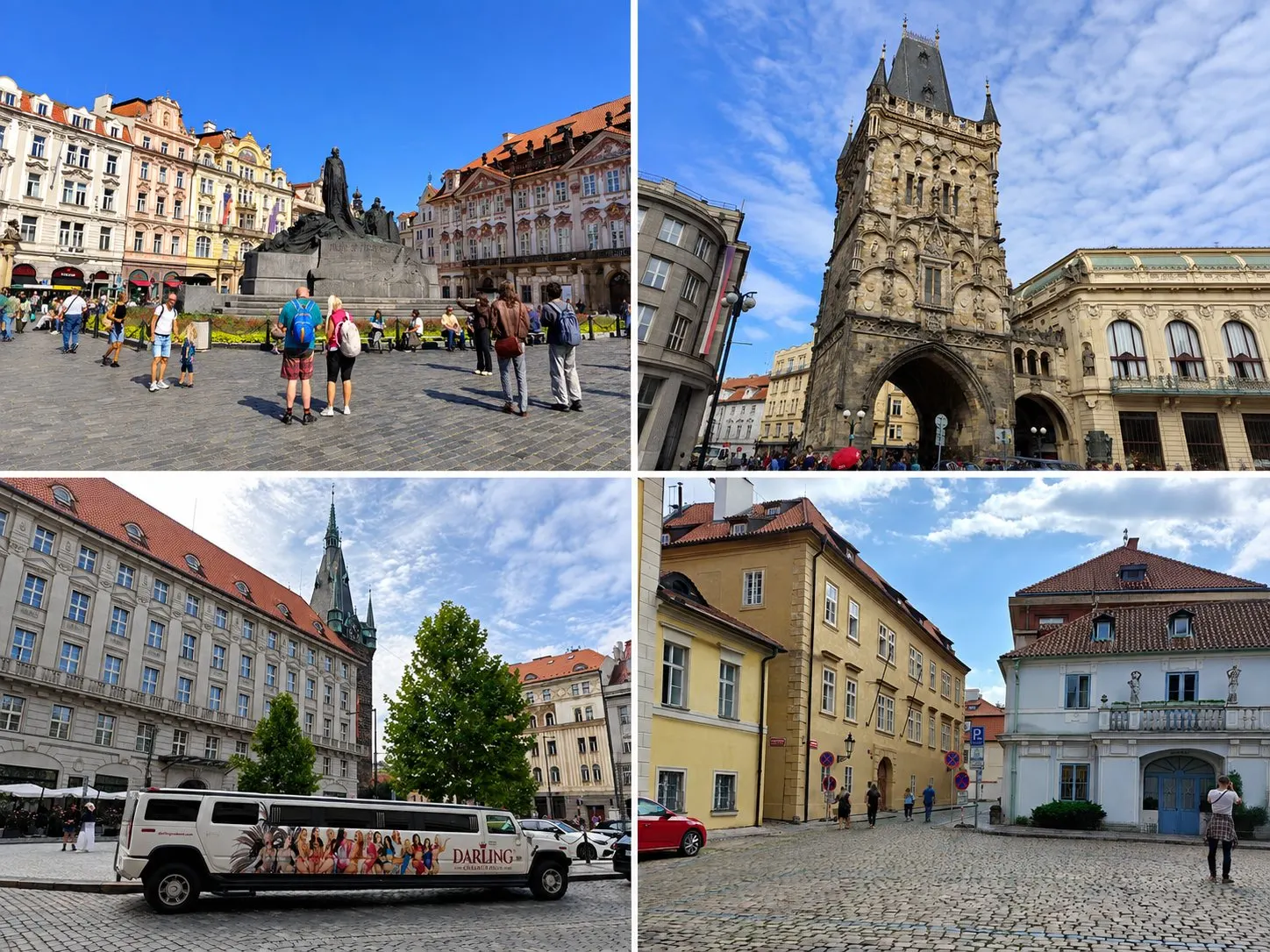
There’s no complicated itinerary needed. Just walk around. Sit somewhere. Grab a coffee. Look at the buildings. And then you’ll probably realise you’ve spent an hour here without actually planning for it.
The Cobblestone Streets
Prague’s cobblestone streets are honestly one of the things that make the city so beautiful. The old buildings, narrow lanes, and uneven stone roads give the Old Town a very different character, especially when you’re walking around in the evening.
But there’s one big downside: moving your trolley on these streets is a nightmare. The constant bumps and uneven surface make even a short walk with luggage feel like a workout. 😅
Still, it’s part of what gives Prague its old-world charm.
Astronomical Clock 🕰️
Right in the Old Town Square is the famous Prague Astronomical Clock. And this thing is more than 600 years old!
The original mechanism dates back to 1410. It’s not just a normal clock. It shows astronomical information, including the positions of the Sun and Moon and zodiac information, along with a calendar dial.
And every hour, there’s the famous little show where the figures move, and the Apostles appear. Definitely watch it once!
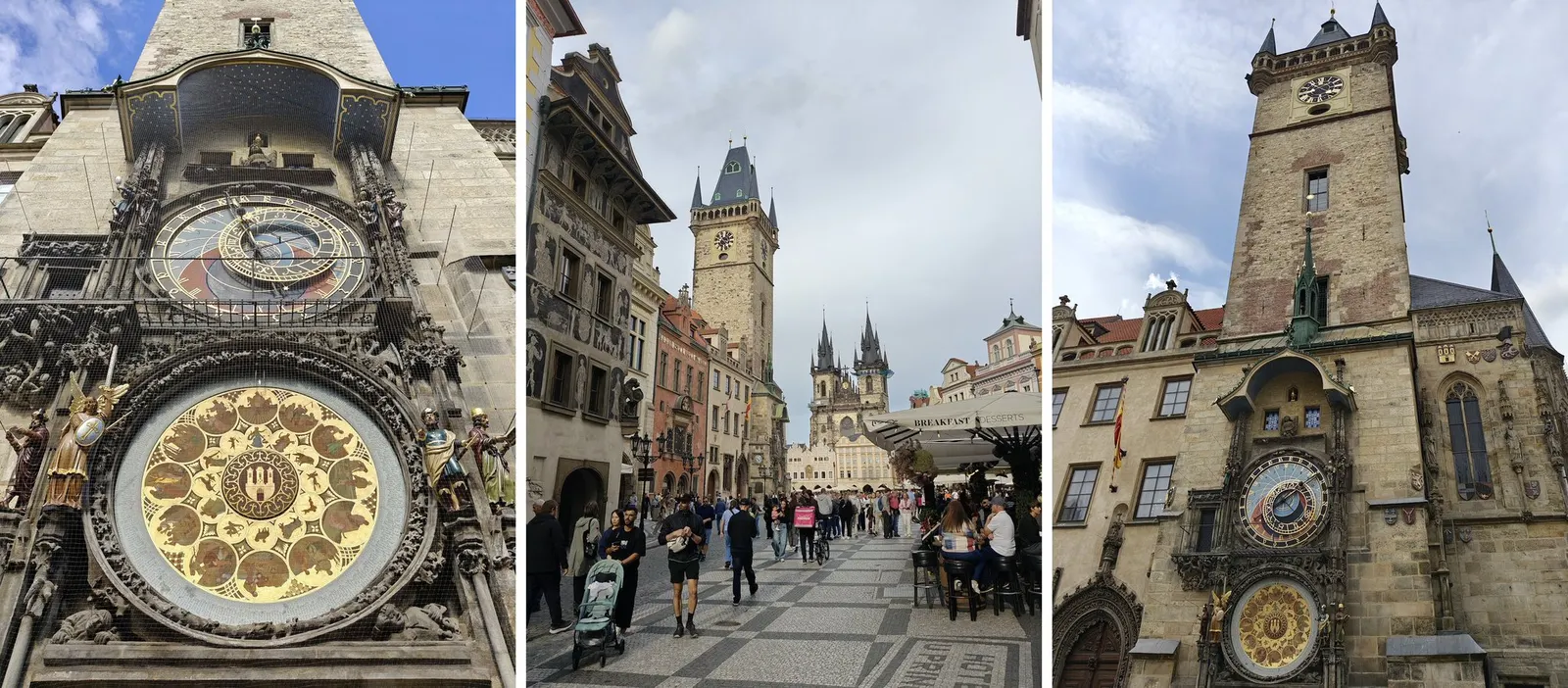
You’ll also know exactly when the show is about to start because suddenly 200+ tourists will appear below the clock with their phones out. 😂
Charles Bridge 🌉
If there’s one landmark that you simply cannot miss in Prague, it’s Charles Bridge. This is probably the most iconic landmark in the city, connecting Prague’s Old Town with Malá Strana across the Vltava River.
The bridge is more than 600 years old. Construction started in 1357 under Charles IV, after the earlier Judith Bridge was destroyed by a flood in 1342. The new bridge was completed in 1402. It was originally known as the Stone Bridge or Prague Bridge and only officially started being called Charles Bridge in the 1870s!
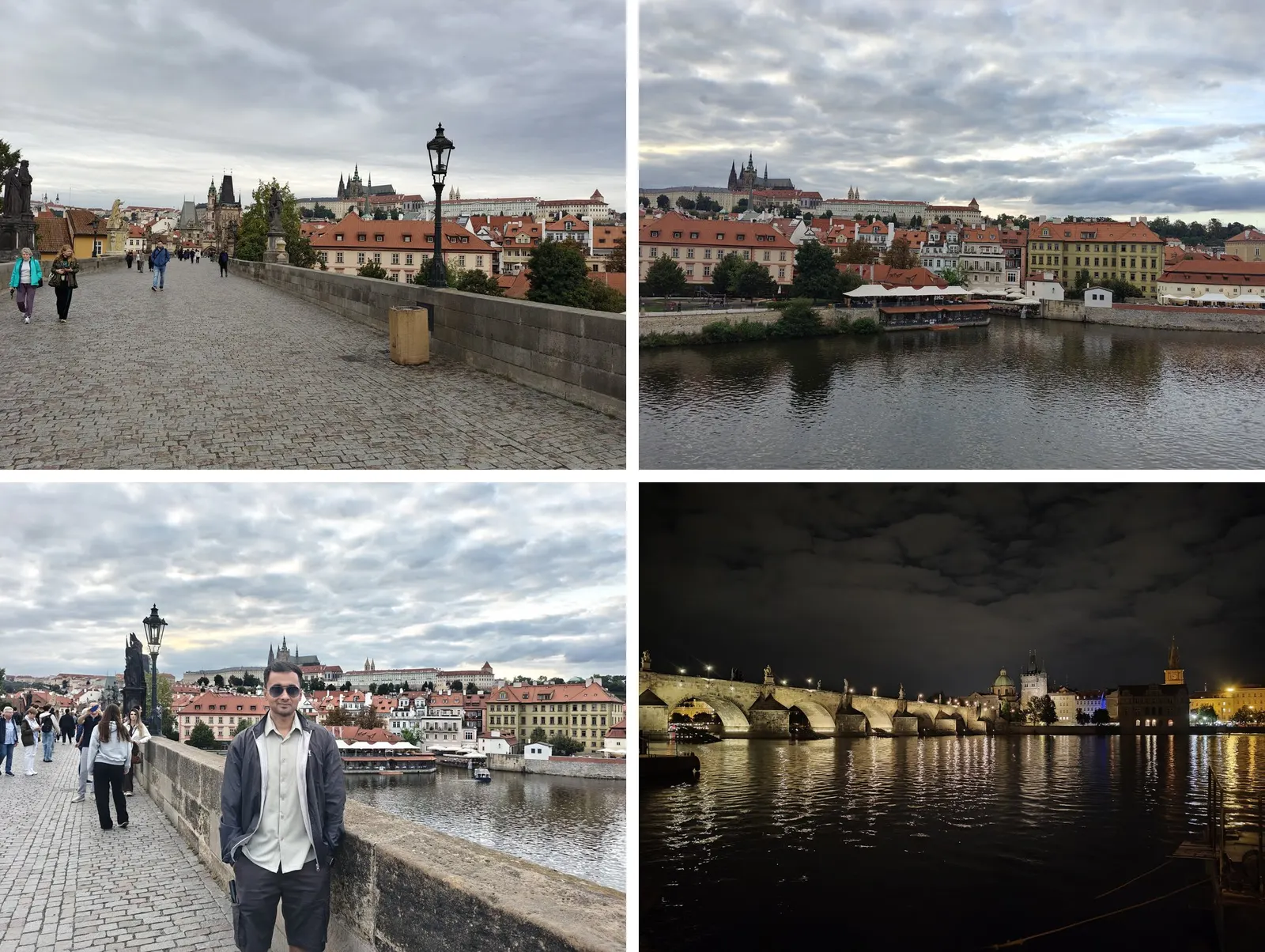
But what makes the bridge particularly interesting is the 30 statues and sculptural groups lining its sides.
Most of these were added between the late 17th and early 18th centuries. They were commissioned by different powerful groups of the time, including nobles, the Church, the Prague municipality, and universities, and were created by some of the most prominent artists of that period.
And then there are the artists. You'll almost always find musicians, painters, caricature artists, and other performers along the bridge. Add hundreds of tourists, souvenir sellers and people stopping every few metres for photographs, and the whole place becomes incredibly lively.
And that's also the problem. Charles Bridge gets absolutely packed. If you want to actually enjoy the bridge and get some decent photographs without having hundreds of people walking behind you, go early!
I went around 8 to 8:30 in the morning, and the difference was massive. There were still people around, but the bridge felt much more open and peaceful, and I could actually stop and take photographs without constantly waiting for people to move.
I'd personally recommend going before 11 AM, and the earlier the better.
Dancing House 💃
After all the medieval architecture, Prague suddenly throws a completely different building at you. The Dancing House!
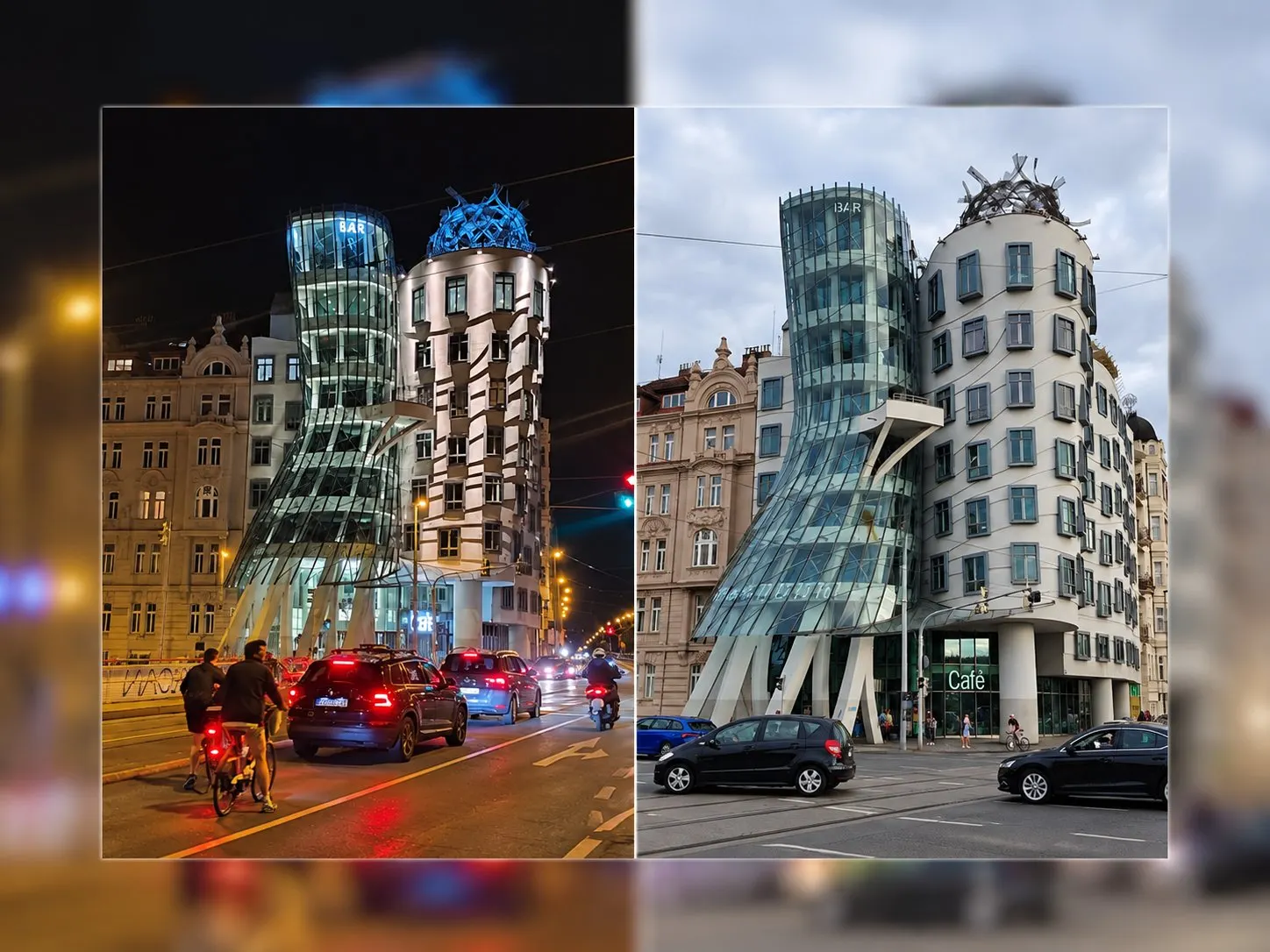
It’s one of the city’s most famous examples of modern architecture.
The building was designed by Vlado Milunić and Frank Gehry and completed in the 1990s. The two towers are designed to look like a dancing couple, which is where the name comes from.
There’s also an interesting bit of history behind the location. The building that previously stood here was destroyed during the bombing of Prague in 1945.
Josefov, the Jewish Quarter ✡️
Just next to the Old Town is Josefov, Prague’s historic Jewish Quarter. This area has several important sites, including the Old-New Synagogue, Spanish Synagogue, and the Old Jewish Cemetery.
It also has a very dark history connected to the persecution of Prague’s Jewish community and the Holocaust.
If you’re interested in this part of Prague, I’d recommend taking a dedicated Jewish Quarter tour.
One thing I found particularly interesting was the contrast around the area. You can walk through a historic Jewish neighbourhood, and then, a few minutes later, you’re surrounded by some of Prague’s most expensive luxury shopping.
You’ve got centuries of history on one side and Louis Vuitton, Gucci, and other luxury brands on the other. It’s quite a contrast!
Prague Castle 🏰
One of the biggest attractions in Prague is Prague Castle!
It’s a huge complex of palaces, churches, courtyards, gardens, and other buildings that have developed over many centuries.
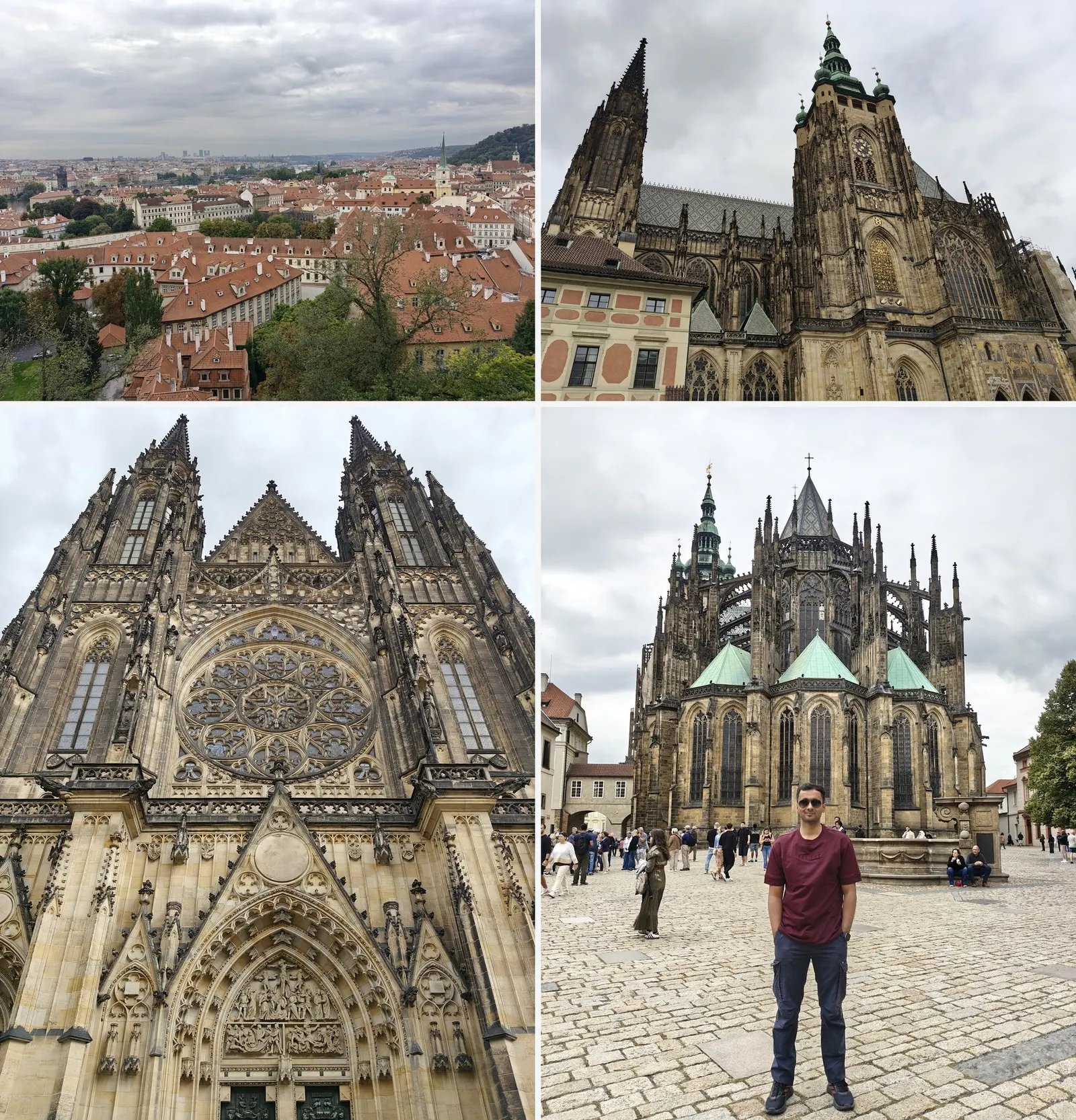
The complex is huge, and you can spend several hours exploring it. If you love historical interiors, museums, and churches, there are paid areas that you can enter.
Personally, I don’t usually pay for every church or castle interior when I’m travelling in Europe. I’ve seen enough of them. So I preferred walking through the courtyards, exploring the outdoor areas and enjoying the views.
The Castle complex itself is enormous, and the views over Prague are beautiful!
And if you want to sit somewhere with a view, there’s also a café at Lobkowicz Palace with a terrace overlooking the city. Perfect place to stop for coffee.
St. Vitus Cathedral ⛪️
When you’re exploring Prague Castle, you'll find the St. Vitus Cathedral. It’s one of the most important religious buildings in Prague and dominates the Prague Castle complex.
The Gothic architecture is impressive from the outside, but the interiors are equally worth seeing if you’re interested in churches and historical architecture.
Franz Kafka’s rotating head 🤯
This is one of those random things I really liked. Near the Quadrio shopping centre, you’ll find a giant silver head of Franz Kafka.
And it moves! The sculpture is made up of 42 rotating panels that constantly change position.
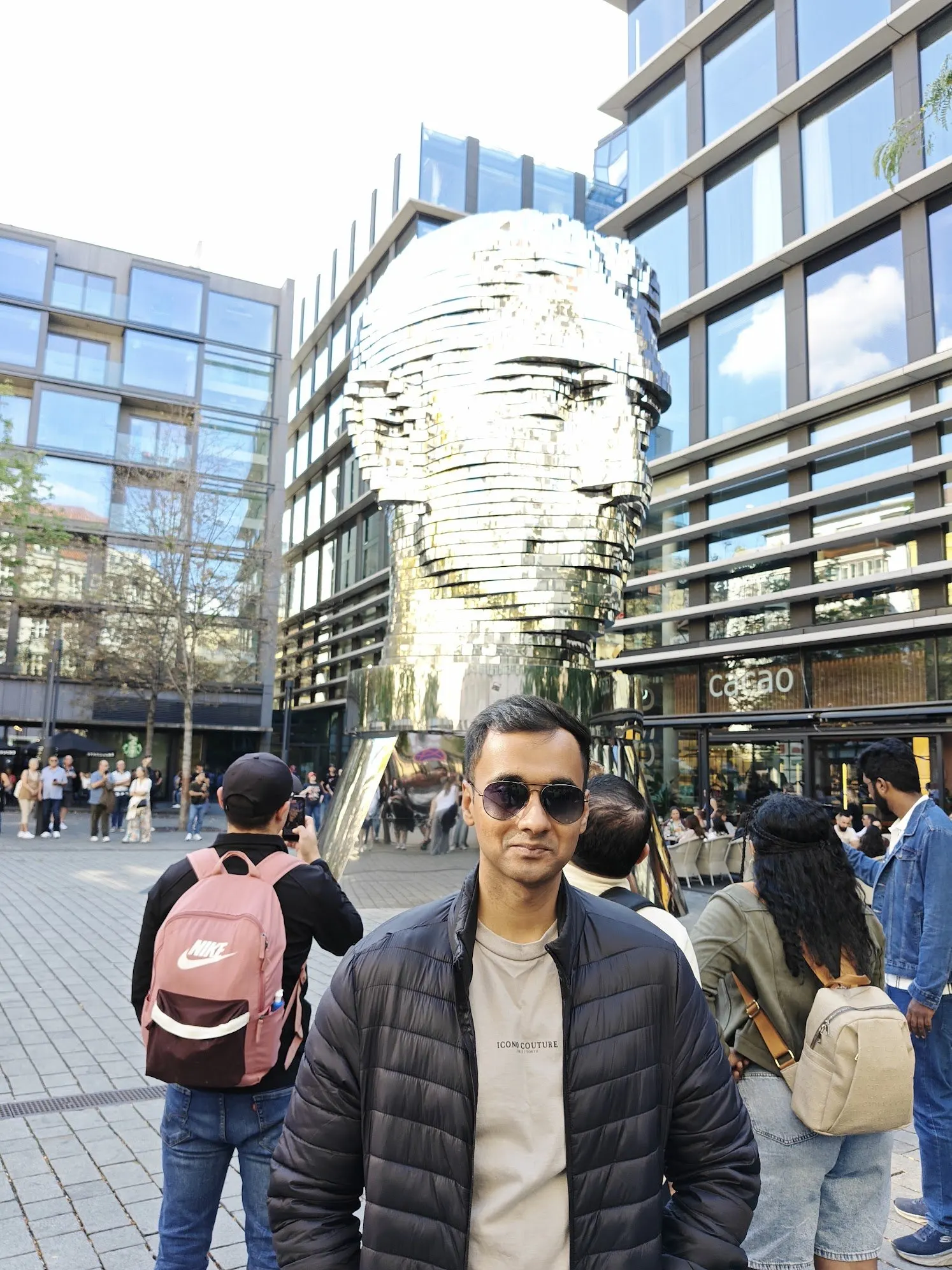
You don’t need to make a separate trip just to see it. But if you’re in the area, stop for five minutes and watch it. It’s actually pretty cool.
Malá Strana 🏘️
Malá Strana, or Lesser Town, is one of my favourite parts of Prague.
Do spend some time exploring the area because the streets here genuinely feel like something out of a fairy tale.
You’ll find beautiful old buildings, narrow streets, small cafés, shops and trams passing through the middle of it all.
And I’d especially recommend coming back here after sunset. The yellow street lights, old buildings and relatively quiet streets give the entire neighbourhood a completely different feel at night.
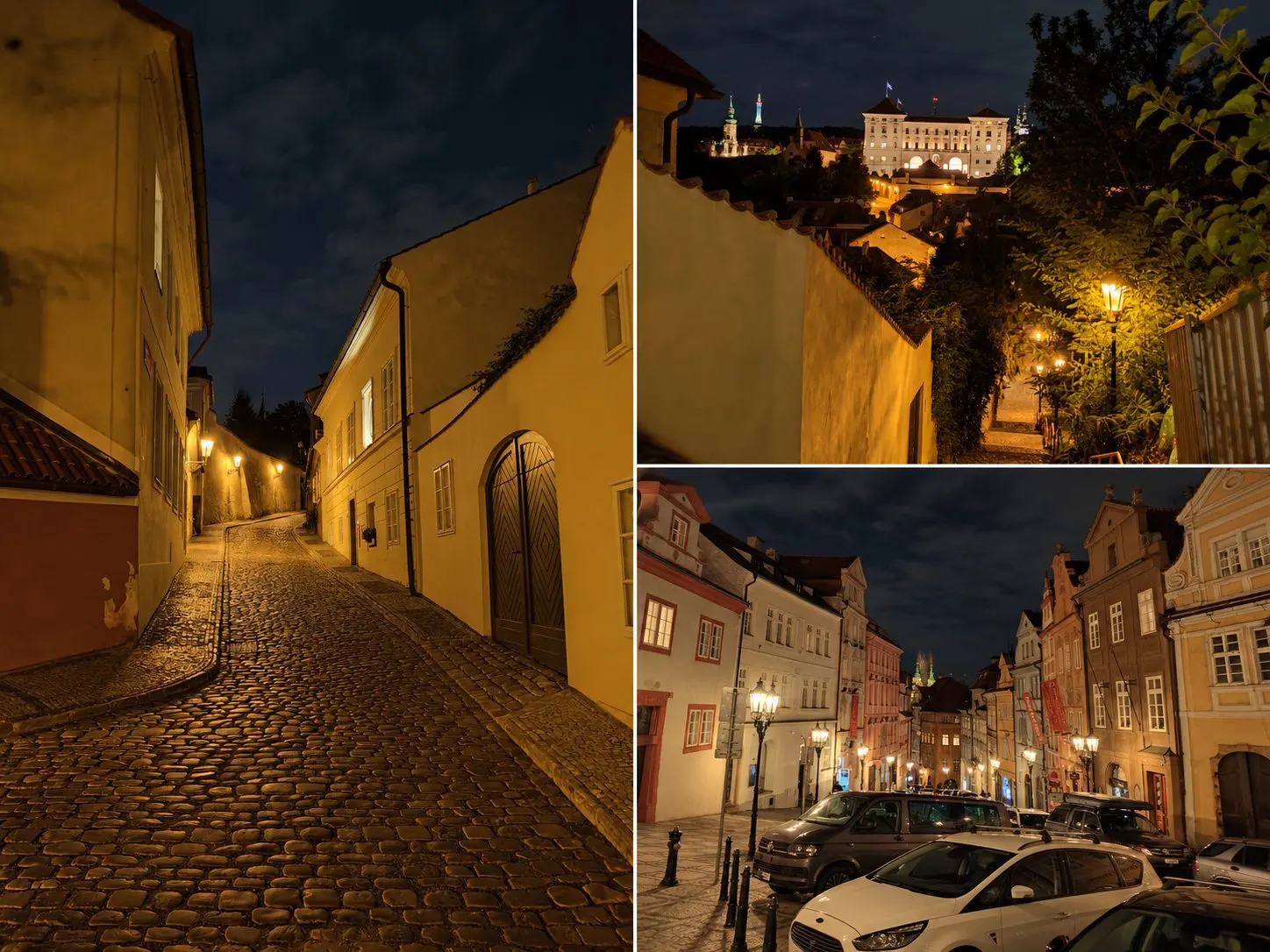
I spent quite a bit of time walking around Prague at night and personally felt very comfortable. So if you have the time, don’t restrict Malá Strana to just your visit to Prague Castle. Spend an evening simply walking around and soaking in the area.
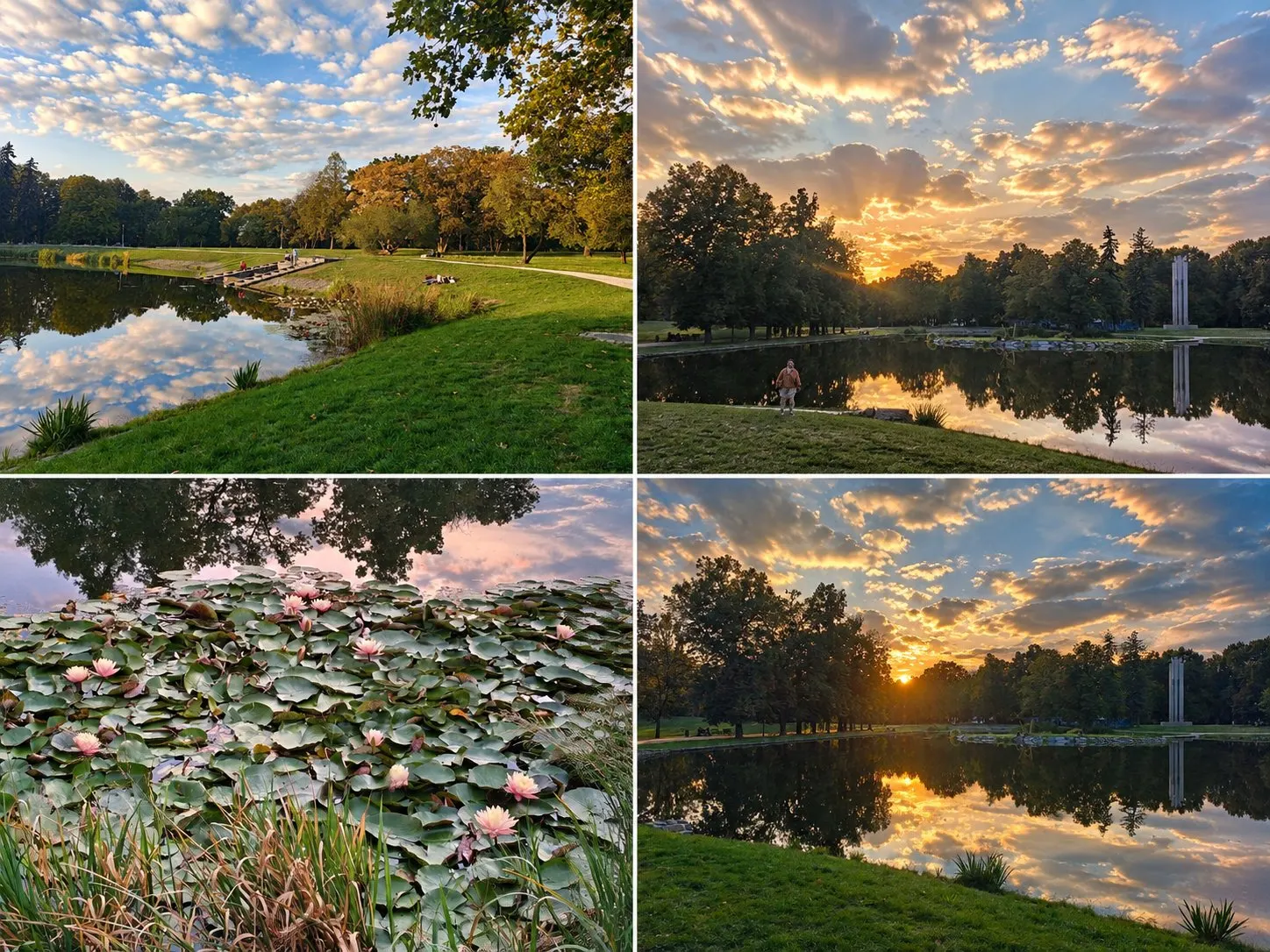
Letná Park 🌳
If you want one of the best views of Prague, head to Letná Park. Depending on where you’re coming from, there’s a bit of an uphill walk.
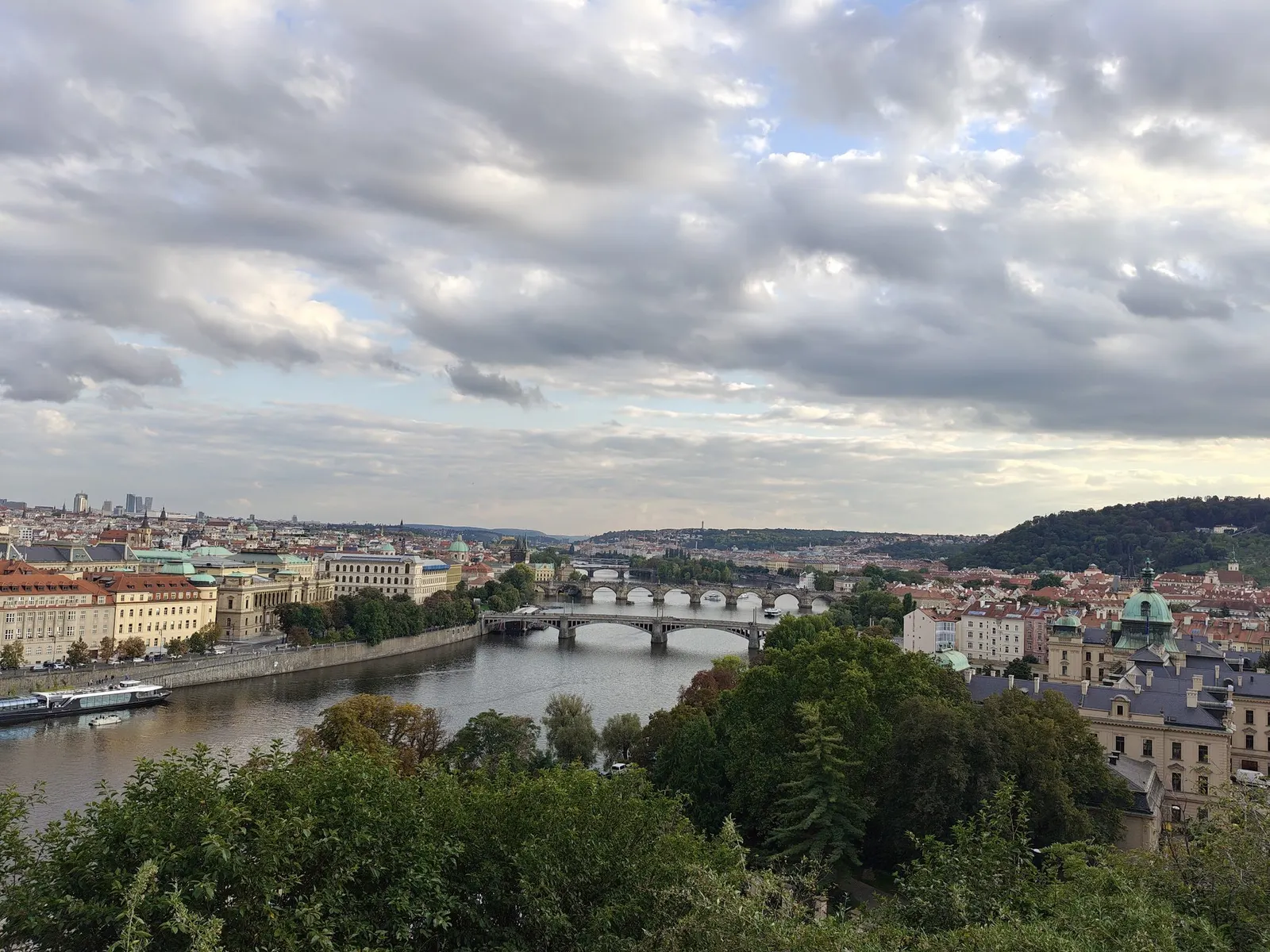
But once you’re up, you get a beautiful view of the Vltava and Prague’s bridges.
This is also where you’ll find some of those classic Prague photographs showing multiple bridges across the river.
But Letná isn’t just a viewpoint. It’s a huge green space where you can sit, walk around, have a picnic, or simply relax. If you’re tired after spending the day in the Old Town, this is a nice place to slow down.
Lennon Wall 🎨
The Lennon Wall is another popular stop in Malá Strana. And here’s something I didn’t know before visiting. John Lennon never actually visited Prague!
The wall became associated with Lennon after he died in 1980, with people putting up Lennon-inspired artwork and messages about peace and freedom.
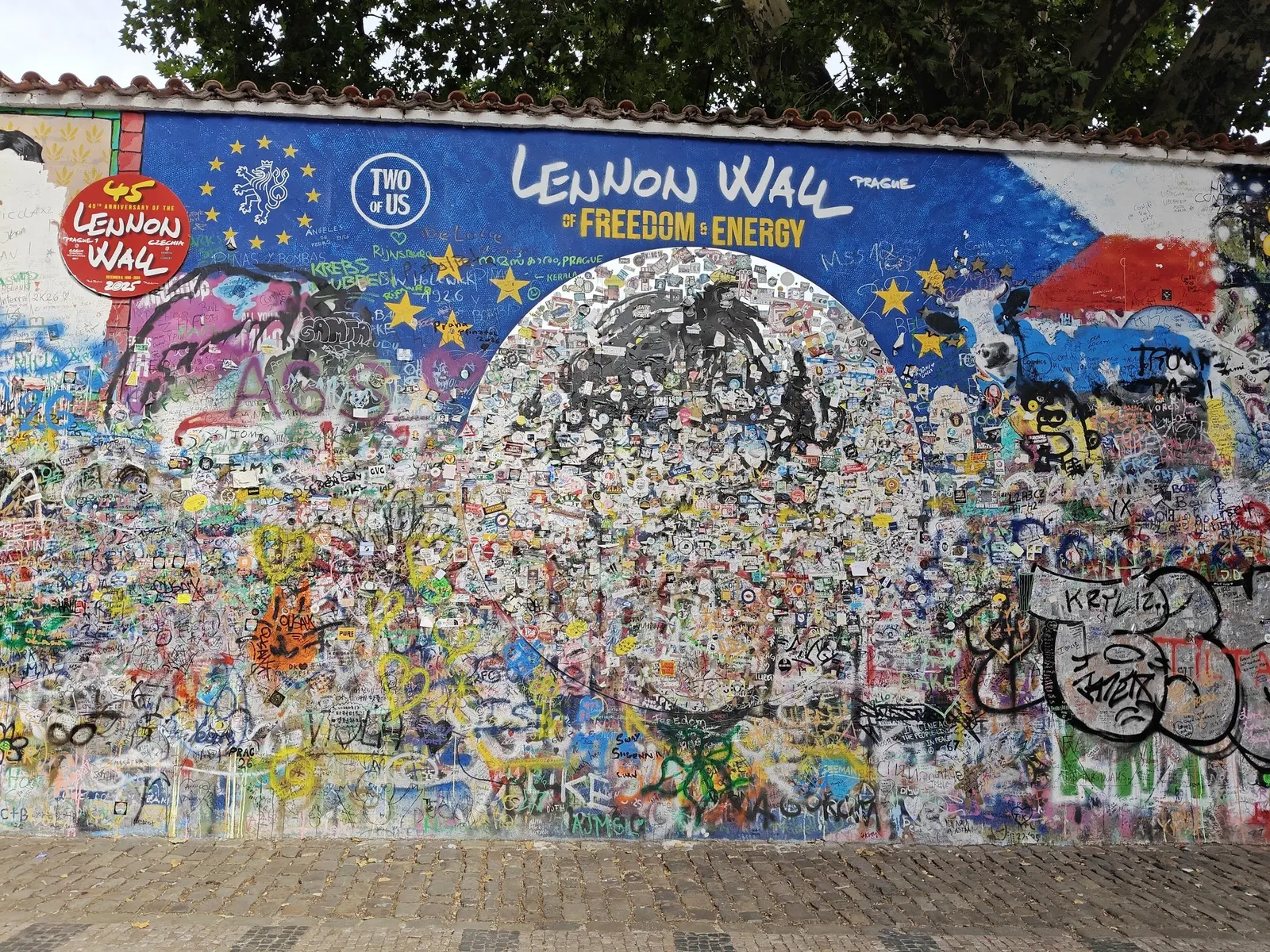
During the communist era, people also used the wall for anti-regime messages. Authorities would paint over it. People would come back and write again.
Today, it’s mostly a colourful graffiti wall and a popular photo spot. But knowing the history makes it much more interesting. There is also a Lennon-themed shop nearby, if you’re into that kind of thing.
Vyšehrad 🌆
If you have some extra time, I’d also recommend Vyšehrad. It’s away from the main tourist centre and gives you a different perspective of Prague.
There are viewpoints, greenery, and plenty of walking paths. I actually enjoyed the walk up here.
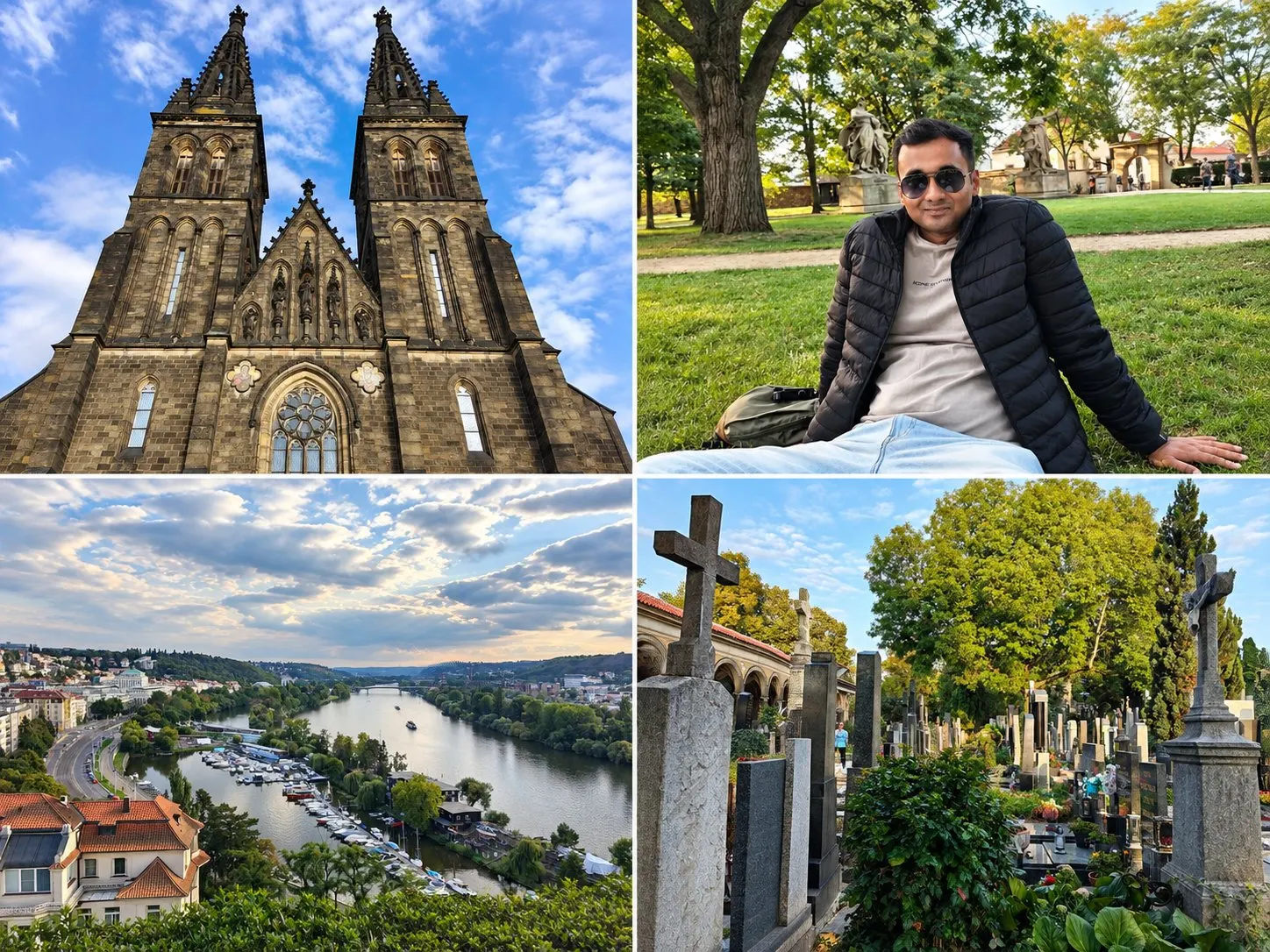
It’s not somewhere I’d prioritise if you have less time in Prague, but if you’re staying for three or more days, it’s worth adding!
Take a Vltava River Cruise 🛳️
Of course, Prague also has river cruises on the Vltava. You can take a short sightseeing cruise or book longer lunch or dinner cruises.
You’ll get views of Charles Bridge, Prague Castle, and the historic centre from the river.
But obviously, Budapest was my favourite river cruise. 😜
For my full Budapest itinerary, including the Danube cruise, read Chapter 01 here - Exploring Europe, Chapter 01: Budapest, Hungary.
Petřín Hill & Tower 🔭
Another place for views is Petřín Hill. The Petřín Lookout Tower is basically Prague’s mini Eiffel Tower. It was inspired by the Eiffel Tower and sits on top of Petřín Hill. The surrounding area is green and makes for a nice walk.
What should you eat in Prague? 🍜
I’ll be honest. I didn’t experiment a lot with traditional Czech food.
Czech cuisine is fairly meat-heavy, so I ended up exploring other cuisines more. But Prague is also quite easy for vegetarians.
You’ll find Indian, Lebanese, Asian, Italian, vegan and vegetarian restaurants across the city. So if you’re travelling from India, food is not really a major concern here.
Five Rivers Indian Kitchen & Bar 🇮🇳
One Indian restaurant I tried was Five Rivers Indian Kitchen & Bar in Josefov. It’s a pretty high-end-looking restaurant. Actually, it looks more expensive than it really is.
The food was good, portions were very generous, and the setting was beautiful. So if you’re craving Indian food after a few days of European food, this is one option to keep in mind.
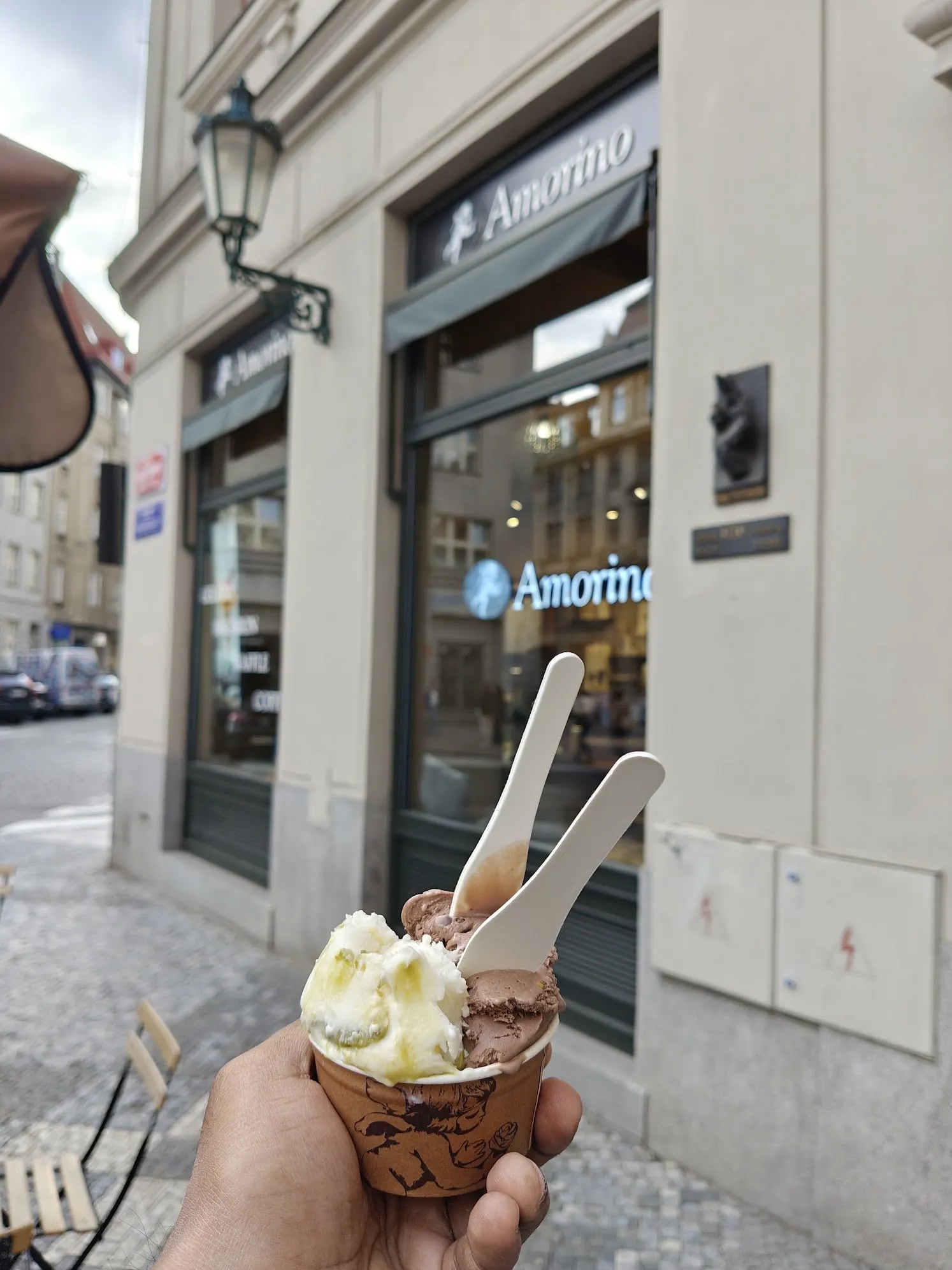
Amorino 🍦
Right near Prague’s Old Town, you’ll find Amorino, which is my go-to gelato brand whenever I’m travelling around Europe. Their flower-shaped gelatos are pretty iconic. My personal pick is Pistachio, but they have plenty of other flavours, along with gelato-filled macarons and sorbets. You can also take 2-3 flavours in a single cup/cone as well! Definitely worth a stop if you’re a gelato person.
Budvar 🍺
And if you drink beer, you’re obviously in the right country. Czechia is famous for beer, and one I particularly liked was Budvar.
It’s brewed in České Budějovice in South Bohemia. I didn’t find it in every bar, but you’ll often see it in smaller shops and supermarkets.
I personally found it light and easy to drink. So if you see Budvar, give it a try.
Nightlife in Prague 🌃
Prague changes quite a bit once the sun goes down. If you're into nightlife, there’s plenty to choose from depending on what kind of evening you want. Roxy, Chapeau Rouge, Karlovy Lázně, Duplex, Cross Club and Ankali are some names worth checking out, with everything from mainstream clubbing to electronic and underground nights.
And if you're looking for something a little more in Prague, keep Goldfingers and Hot Peppers on the list too. I’ll leave it at that. Visit them and thank me later. 😄
Kutná Hora ⛪️
Now let’s get to the first place outside Prague: Kutná Hora!
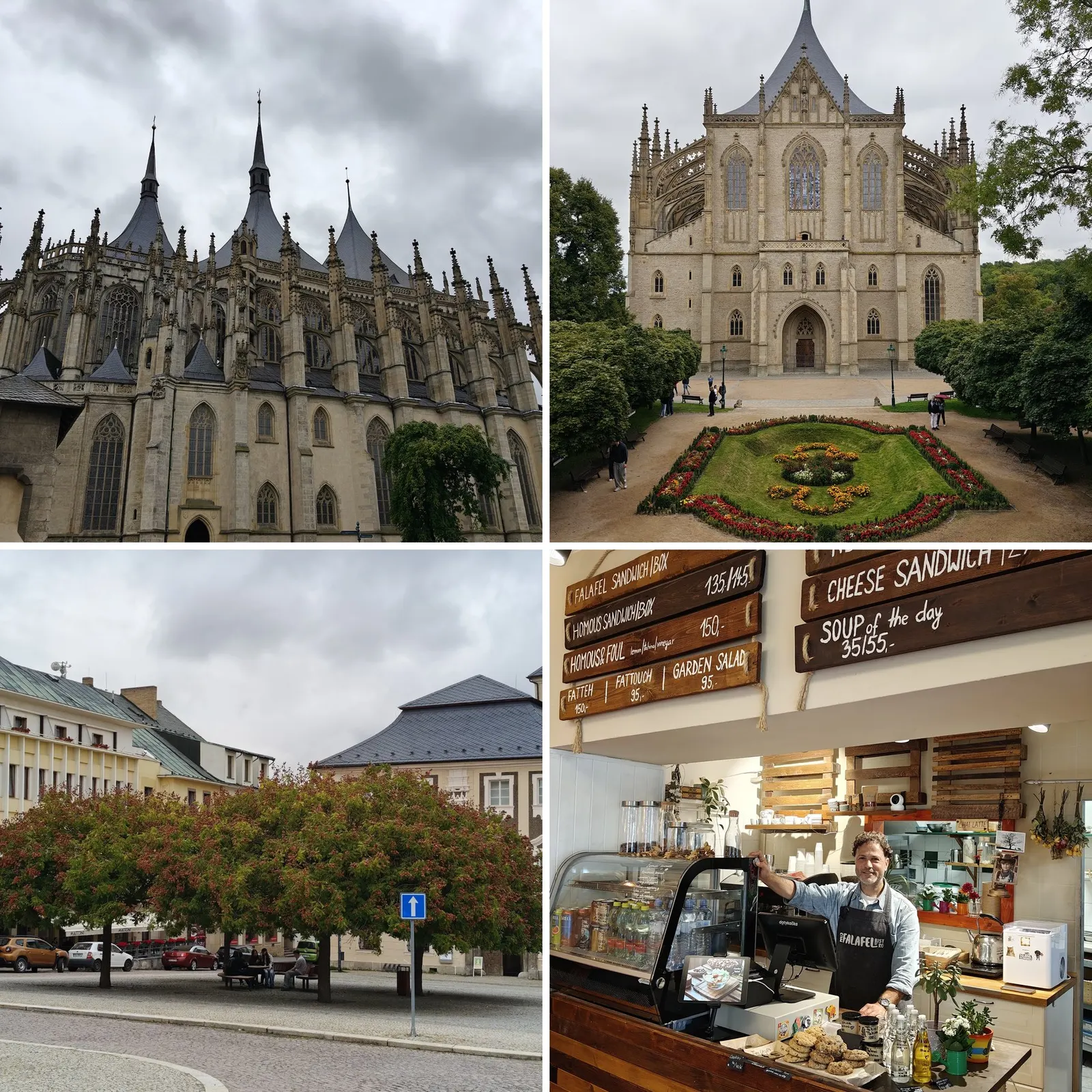
If you’re staying in Prague for three or four days, Kutná Hora is probably one of the easier day trips you can do. It’s roughly 1.5 to 2 hours away depending on the route and connections. And it’s a completely different experience from Prague.
It’s a small historic town with beautiful old buildings, narrow streets, and a much quieter atmosphere.
The historic centre, along with St Barbara’s Church and the Sedlec area, is part of the UNESCO World Heritage site.
St Barbara’s Church ⛪️
The main attraction for me was St Barbara’s Church. It’s an enormous Gothic church and is one of the most recognisable landmarks in Kutná Hora.
The church was closely connected to the town’s silver-mining history, and St Barbara is the patron saint of miners. Even if you don’t go inside, the exterior and the area around it are beautiful.
And when I visited in September, there was another surprise!
Grapes!
It was grape harvest season, and there were vineyards around the area with grapes hanging from the vines.
The whole setting was just beautiful. You have this giant Gothic church, vineyards, rolling views, and a small historic town around you. It honestly felt very different from Prague.
Wine in Kutná Hora 🍷
Kutná Hora has a long wine-making history, so if you’re visiting around harvest season, you’ll see vineyards around the town. We were lucky enough to visit when the grapes were actually on the vines.
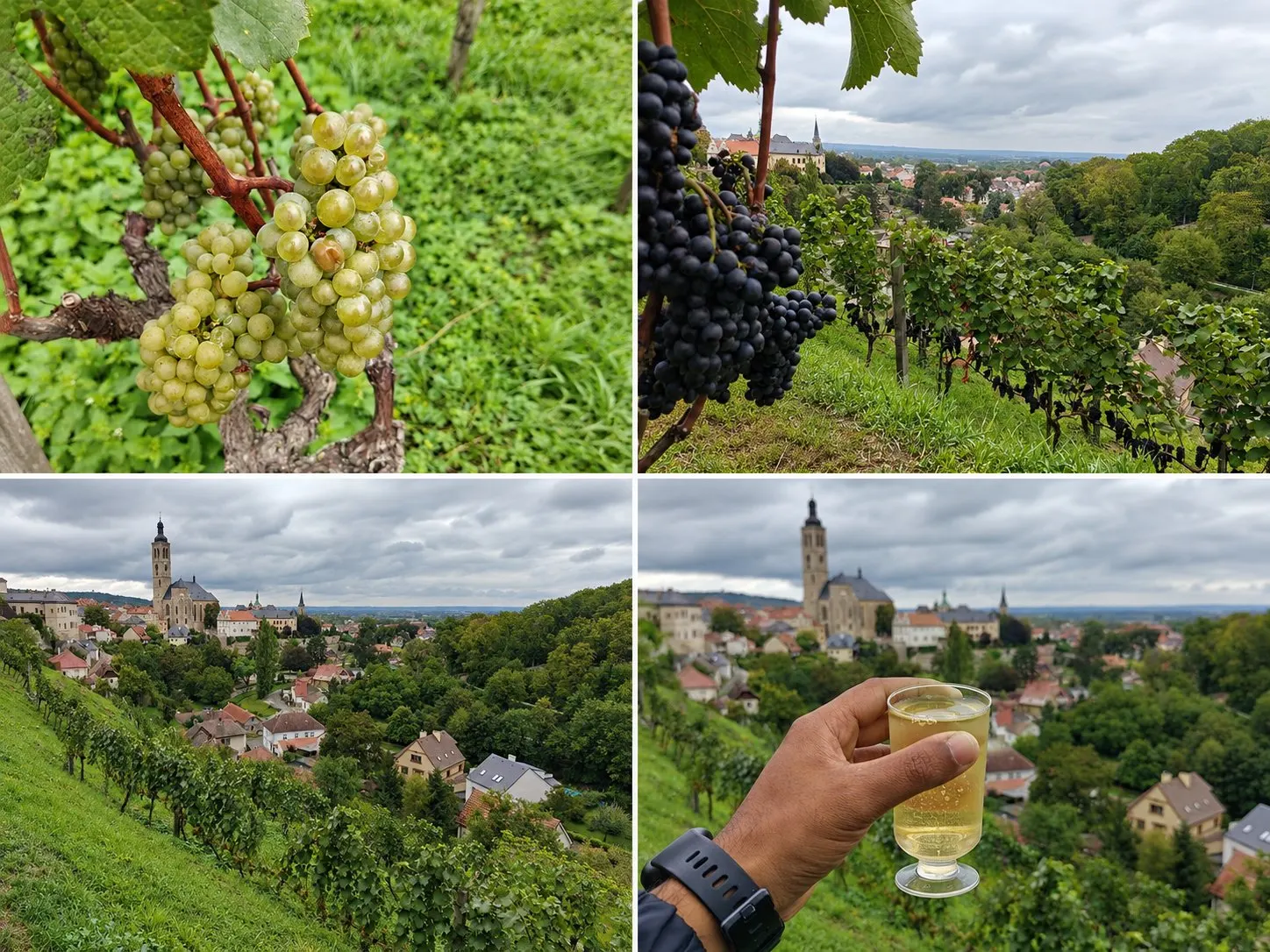
And yes, you can find local wine here as well. So if you happen to visit around September, keep an eye out for the vineyards.
Bohemian Garnet & Moldavite 💎
Another thing you’ll notice in Czech souvenir and jewellery shops is Bohemian garnet. It’s one of the traditional gemstones associated with the Czech Republic.
You’ll also see moldavite, a green gemstone created by a meteorite impact around 15 million years ago. You’ll find both in jewellery shops, sometimes set in gold. Some pieces can get quite expensive.
If you’re a non-EU traveller, you may also be eligible for a VAT refund at the airports on qualifying purchases, subject to the applicable rules and paperwork. So if you’re planning to buy jewellery, ask the shop about the VAT refund process before paying.
MUJ Falafel Bistro 🧆
And then there was food! We found this small Lebanese vegetarian/vegan place called MUJ Falafel Bistro.
The place is tiny, but the food was genuinely good. I had one of the best hummus I’ve eaten on this trip here!
The owner was also really nice and welcoming. This is exactly the kind of place I like finding while travelling. Not fancy and not something you found because Instagram told you to go there. Just a small local place with good food!
Sedlec Ossuary 💀
Another place you should definitely visit in Kutná Hora is the Sedlec Ossuary, also known as the Church of All Saints. And this is not your usual European church!
The small chapel is decorated with the bones of thousands of people, including a famous chandelier made entirely from human bones. It sounds slightly bizarre, but the place has a very interesting history and is one of the most unusual sights you’ll see in the Czech Republic.
The entry currently costs 220 CZK per adult, and the ticket also includes entry to the nearby Cathedral of the Assumption of Our Lady and St. John the Baptist. The ossuary has limited capacity, so you need to book a specific time slot, and I’d recommend booking in advance rather than just showing up.
One important thing: photography is not allowed inside the ossuary, so you’ll have to leave the camera away and actually experience the place!
How long do you need in Kutná Hora?
You can comfortably do Kutná Hora as a day trip from Prague, and that’s what we did. But getting there is slightly more complicated than some of the other day trips you can do from Prague.
The usual route is Prague → Kolín → Kutná Hora. You take an S1 train from Prague towards Kolín, and from Kolín, change to the S20 towards Kutná Hora. The entire journey takes roughly 1 to 1.5 hours, depending on your connection.
Once you reach Kutná Hora hlavní nádraží, you’re still not in the historic centre. This is where it gets slightly confusing.
You can take the local bus to reach areas such as Sedlec and the central bus station. If you’re visiting the Sedlec Ossuary, get off at Kutná Hora-Sedlec rather than going straight to the town centre.
So I’d recommend planning the entire route beforehand, especially the Kolín connection and the local transport within Kutná Hora.
Give Kutná Hora one full day, including the travel time from Prague. That gives you enough time to cover Sedlec, St Barbara’s Church, and the historic centre without rushing.
Český Krumlov 🏘️
And now for my favourite place outside Prague - Český Krumlov!
If you’re planning to visit this town, here’s my biggest recommendation: Don’t make it a day trip!
Technically, you can. But stay for at least one night if you can. We stayed for two days, and I was very happy we did.
Český Krumlov is a small historic town built around the Vltava River. And the river bends around the town in this almost S-shaped curve.
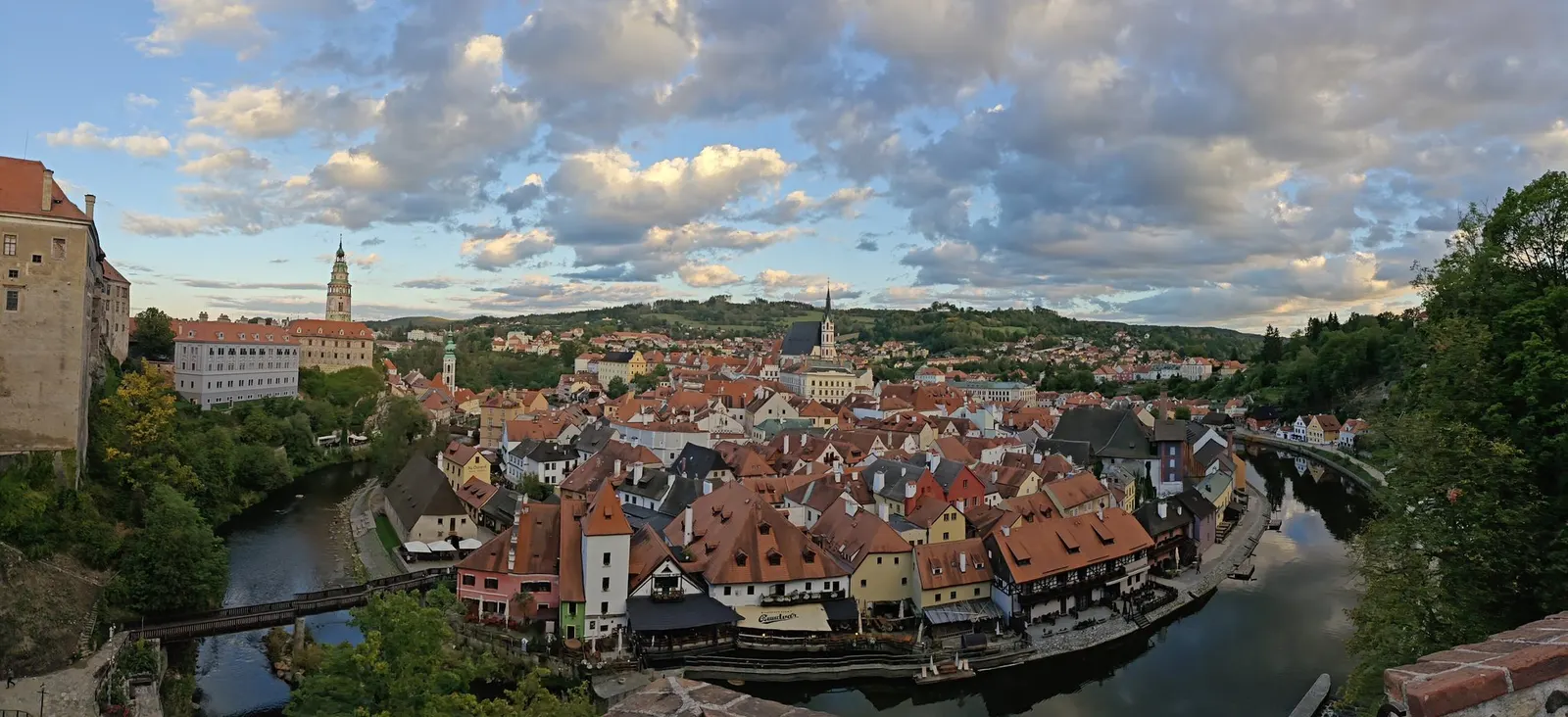
Then you have the huge castle sitting above the town. It’s basically a fairy-tale town.
You know those European pictures where you look at them and think, “There’s no way this is real”? Český Krumlov is one of those places!
Getting to Český Krumlov 🚌
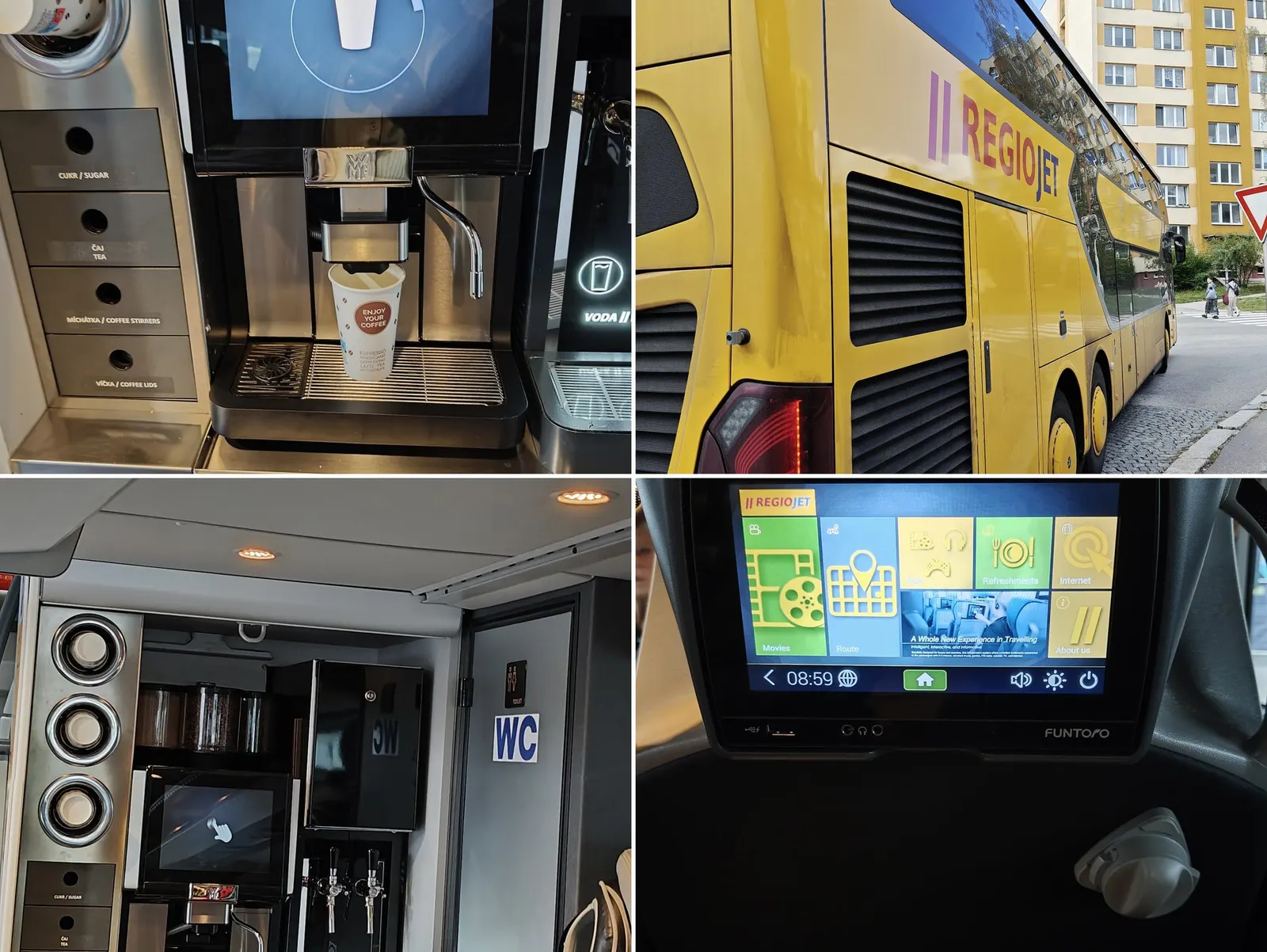
We travelled from Prague by RegioJet bus. The journey took around 2.5 hours.
And as I mentioned earlier, I actually really liked the bus. It had comfortable seats, a coffee vending machine, and a seat-back screen where you can watch movies.
For a 2.5-hour journey, I couldn’t really complain. And once you reach Český Krumlov, the town itself is small enough that you can explore most of it on foot.
RegioJet is one operator you’ll see quite often in this region. We actually used RegioJet later to travel from Prague to Český Krumlov, and I really liked the bus. It had comfortable seats, a free coffee vending machine, and even a screen on the seat where you could watch movies. For a 2.5-hour journey, that’s not bad at all!
The Castle 🏰
The Český Krumlov Castle is the second-largest castle complex in the Czech Republic after Prague Castle. And you don’t have to pay to walk through the castle complex itself.
There are paid tours for the interiors, tower, and other attractions, but the courtyards and many of the outdoor areas can be explored without buying a castle tour ticket.
This was perfect for me. I don’t need to enter every castle I see. Give me a beautiful courtyard, a good view, and some sunshine, and I’m happy.
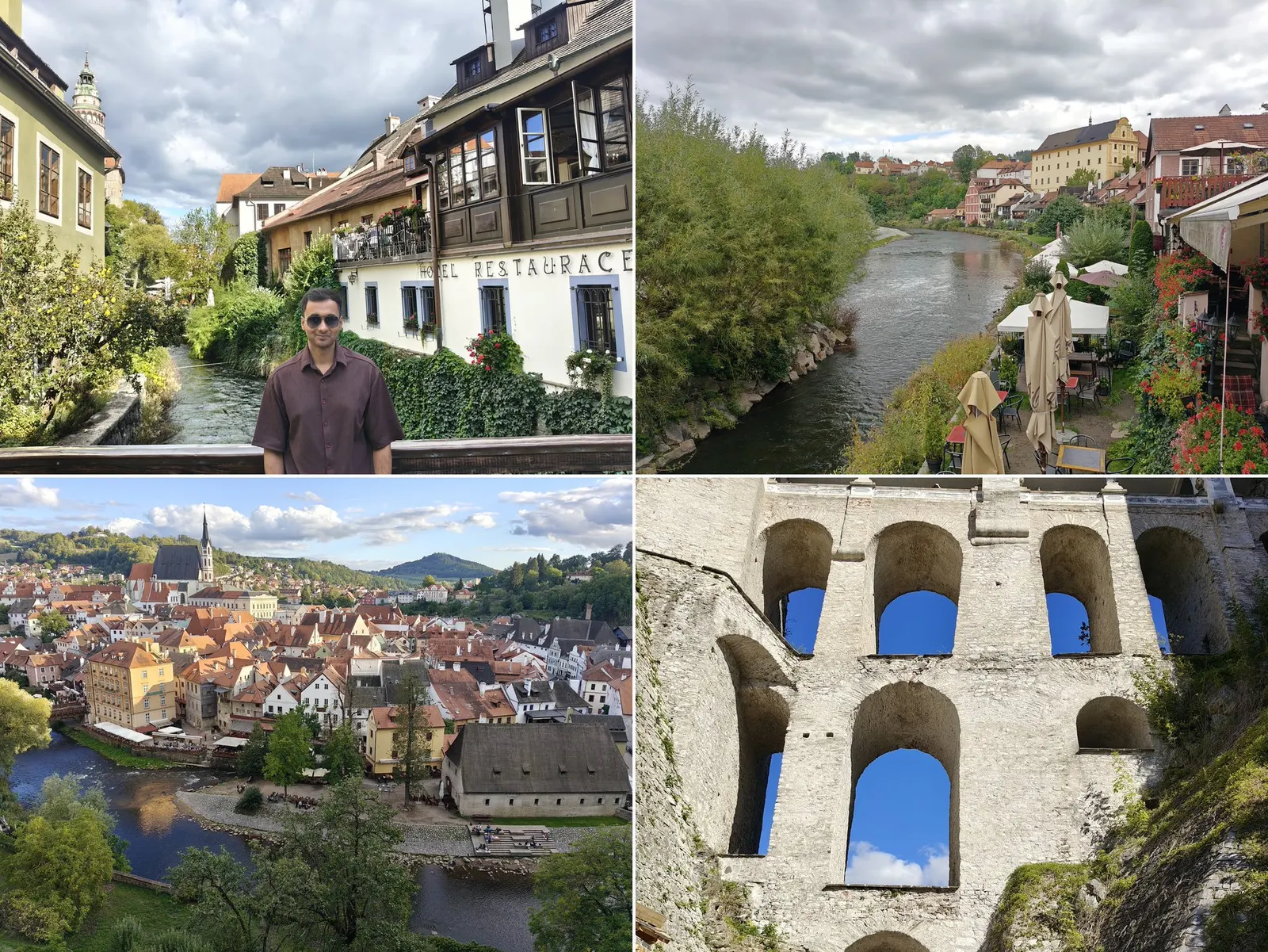
The castle is built above the town, so you get some beautiful views of Český Krumlov and the Vltava below. I actually went up there multiple times during our stay.
The Castle Gardens 🌳
The castle gardens were another favourite. They’re beautifully maintained, with trimmed hedges, trees, fountains, and plenty of open space.
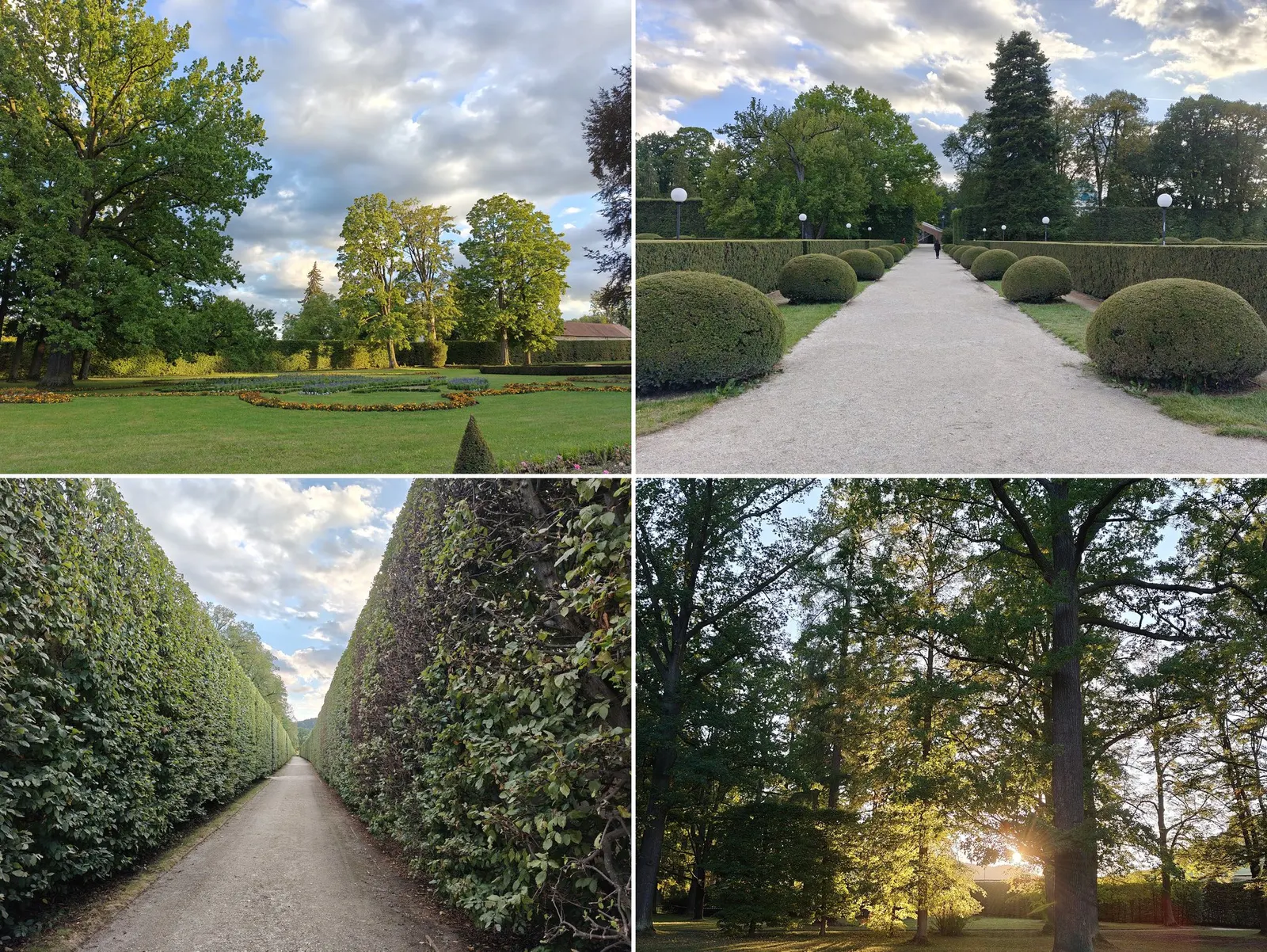
When the sunlight comes through the trees, the whole place looks almost unreal. It’s one of those places where you don’t really need an itinerary. Just walk around.
The giant “wall” 😜
There’s also this massive structure connecting parts of the castle complex that initially looked like a giant wall to me. It’s actually the Cloak Bridge, or Mantle Bridge.
It’s a multi-level bridge connecting different parts of the castle complex and passing over the moat. And when you stand underneath it, you realise just how massive the castle complex actually is. The views from around here are also beautiful.
Walk around the Old Town 🏘️
The old town itself is probably the biggest attraction. You have the Old Town Square, small streets, colourful buildings, little shops, and the Church of St Vitus.
There’s also Latrán, the historic area immediately below the castle. Just walk around.
Seriously, you don’t need to keep checking Google Maps every five minutes. Every nook and corner looks picturesque. There are museums around the town as well, but honestly, I didn’t feel like going into many of them. The town itself felt like one giant open-air museum.
Laibon 🌱
One place I kept going back to in Český Krumlov was Laibon the Restaurant! I actually had meals here four times, which probably tells you enough about how much we liked the place.
It’s a vegetarian restaurant right beside the Vltava, so you get a beautiful riverside view while having your food. The atmosphere is relaxed, the food is fresh, and the overall vibe is just fantastic.
And then there’s David, the host. This guy has travelled to 100+ countries and has spent around a year travelling through India. He knows India, Indian food, and Indian culture so well that, honestly, he probably knows more about India than you do. 😂
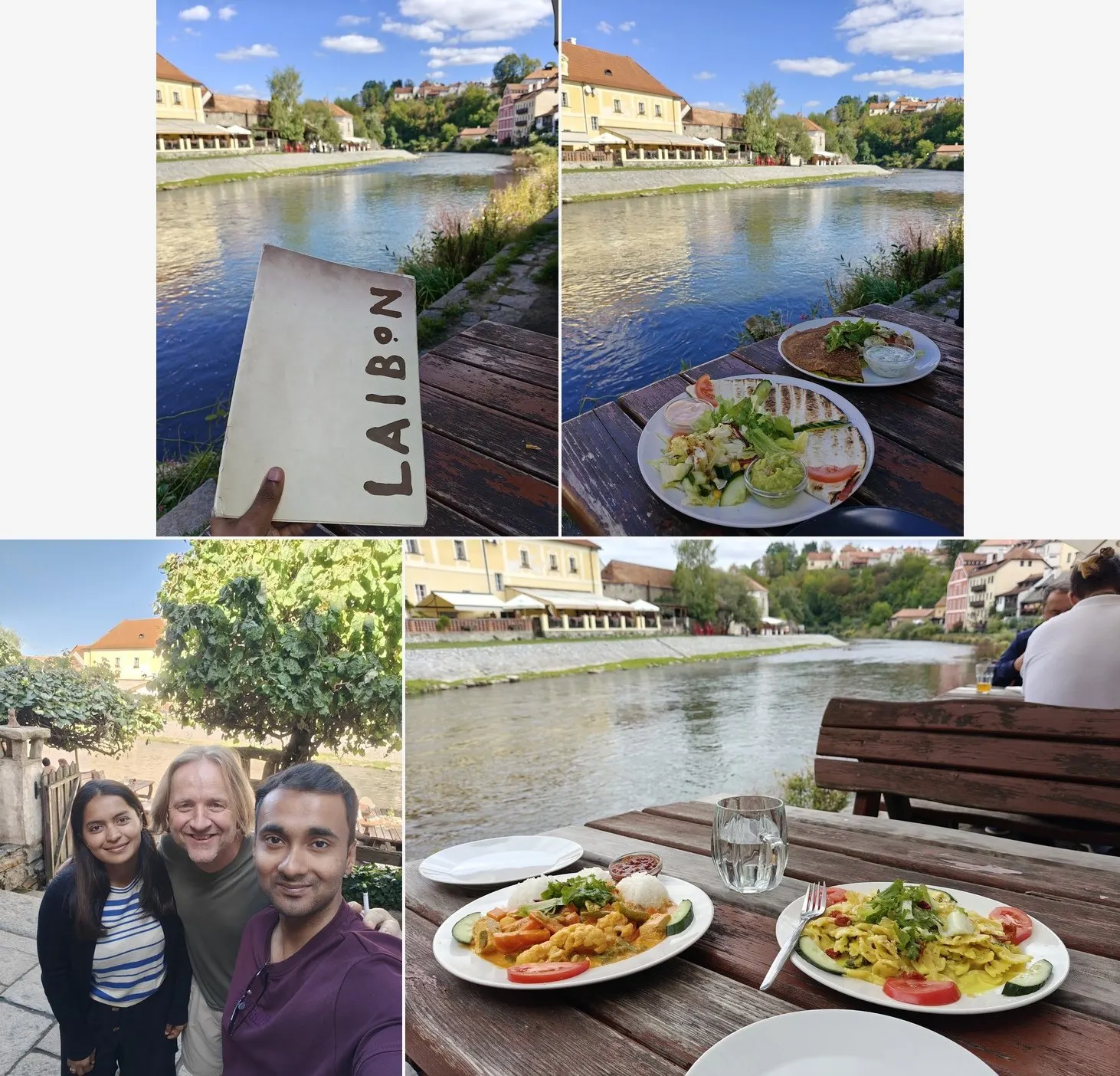
Delicious Veg Food at Laibon! Also, David, the host, is an amazing guy!
He was genuinely one of the nicest people we met during the trip, and that made the experience even better. The restaurant is slightly on the expensive side, but I thought the quality justified it.
And if you go, definitely try their quesadillas. They use Gouda (Dutch) cheese, and they were easily one of my favourite things I ate here.
Honestly, between the food, the riverside location, the atmosphere, and David, Laibon ended up being one of those places that became a part of the trip rather than just another restaurant we visited.
Rafting on the Vltava 🛶
Now for something for the slightly more adventurous folks, you can actually go rafting on the Vltava.
There are different operators and routes, and you can spend a few hours on the river. What makes it more interesting is that the river has a series of weirs, so you get these little drops and sections where the raft moves through the water quite differently.
It’s not extreme white-water rafting. But it’s fun. And you’re basically rafting through one of the prettiest towns in Europe. So that’s not a bad way to spend an afternoon.
Chapel of the Mountain of the Cross ⛪️
If you’re up for a bit of a hike, you can also walk towards the Chapel of the Mountain of the Cross. It’s a little outside the main tourist centre, and the walk takes you through residential parts of the town and uphill.
The chapel itself is nice, but for me the walk was more interesting. You also get a different perspective of the town from up there. The view is partly blocked by trees, so don’t go expecting a completely unobstructed postcard view.
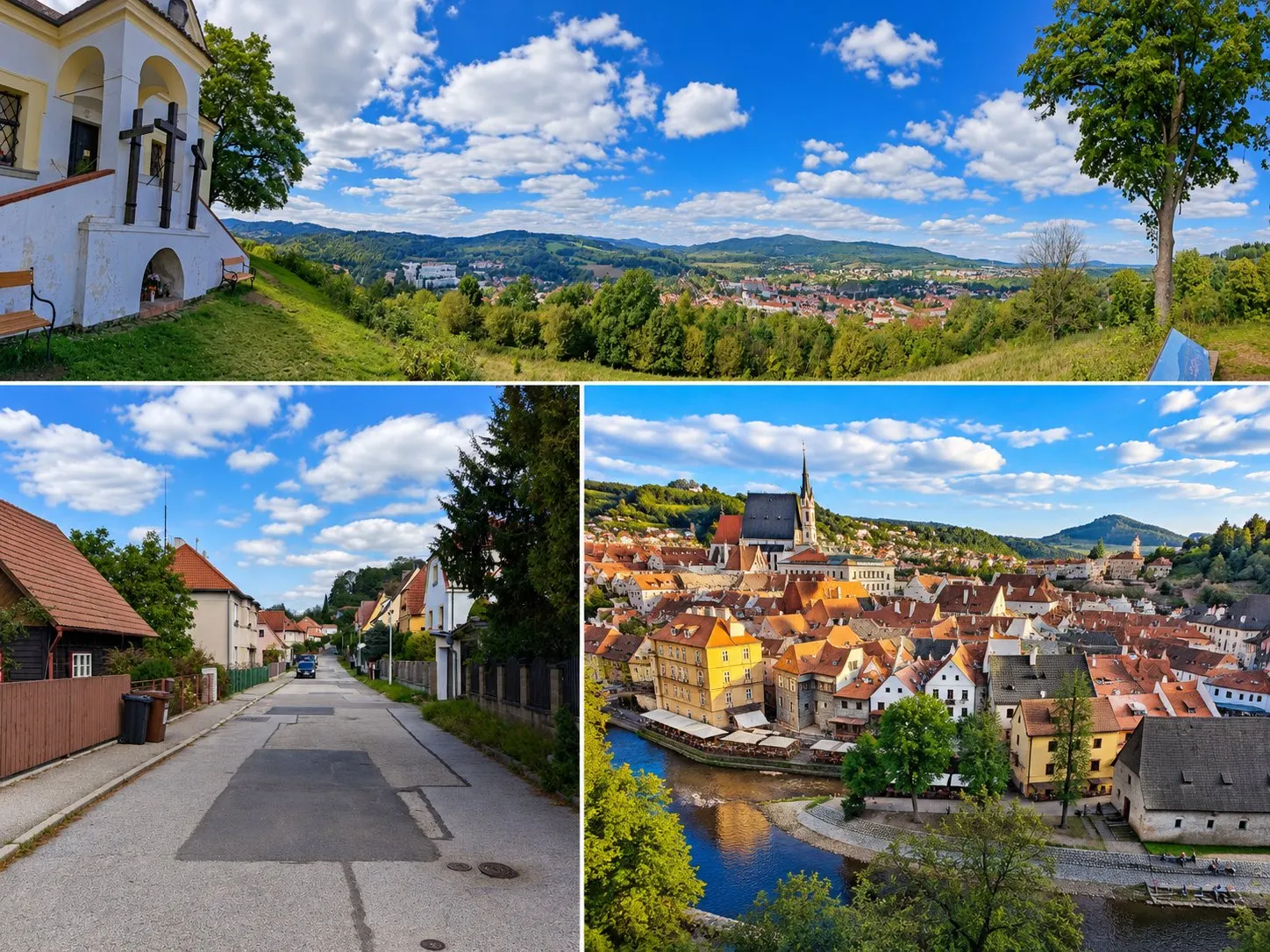
But it’s still a nice walk if you have the time and want to get away from the tourist centre.
Jewellery & gemstones 💎
Just like Kutná Hora, you’ll find plenty of shops selling Czech garnet and moldavite here. If you’re looking for jewellery or souvenirs, there are plenty of options.
And because Český Krumlov is such a day-trip, tourist-heavy town, you’ll find everything from small handmade souvenirs to fairly expensive jewellery.
Český Krumlov at night 🌙
And this is another reason I think you should stay overnight. The town completely changes after sunset.
The yellow lights come on, the streets become quieter, and the castle starts looking even more dramatic.
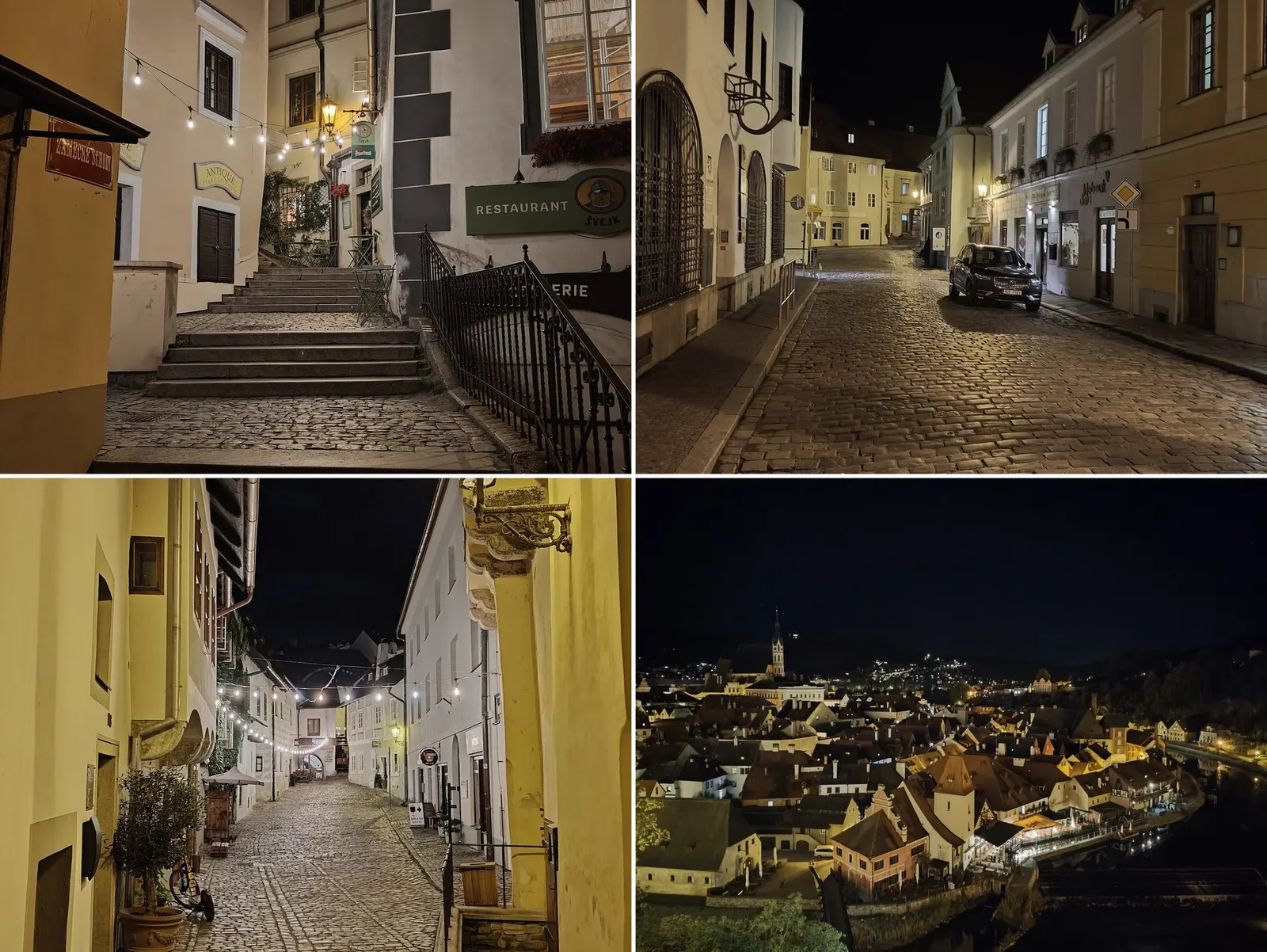
During the day, it’s full of tourists. At night, it feels like a completely different town with very less crowd.
We also noticed a lot of fruit trees around the town during September. Small apple trees with fruit hanging from them. Again, completely random observation. But these are the kinds of things I remember from trips.
Prague, Kutná Hora or Český Krumlov?
If you have limited time, I’d prioritise Prague. That’s the obvious one.
If you have an extra day, add Kutná Hora. And if you have another one or two days, definitely consider Český Krumlov.
But I wouldn’t try to squeeze Český Krumlov into a few hours just so you can say you’ve been there. The whole point of going there is to slow down! Stay overnight. Walk around after the day-trippers leave. See the town at night. Wake up there. Then leave. That’s a much better way to experience it.
One last thing about Prague 🇨🇿
Prague is one of those cities where you can keep adding things to your itinerary. You can do the classic tourist attractions. You can explore the history. You can go looking for Kafka. You can take a river cruise. You can spend an afternoon in a park. You can go on a themed walking tour. Or you can completely ignore the itinerary and just walk around the city.
And that’s probably what I liked most about it.
It works whether you’re looking for history, architecture, food, nightlife, or just a beautiful European city to wander around.
Also, Prague is genuinely one of the craziest places to be in Europe if you know where to look. 😜
That’s Chapter 02 🇨🇿
This is just the second chapter of my Exploring Europe series. I’ll keep covering the cities, towns, and places I’ve visited across Europe, along with all the practical stuff that can actually help you plan your trip.
If you’re planning a Czech Republic trip, bookmark this and come back to it while planning.
And if there’s a particular city, town, or place you want me to cover next, comment below. 👇
If I’ve been there, I’ll definitely keep it in mind for the next chapter.
If you’re planning a Europe trip and need help with your Schengen visa, you can also book a consultation with me here - https://topmate.io/captain_visas. OR just WhatsApp me at: https://tinyurl.com/6zmzbecb
See you in Chapter 03. 🇪🇺